

Bryson is guest on The Royal Studies Podcast as a panelist
“In this roundtable episode, host Ellie Woodacre is joined by a panel of five experts on monarchy in premodern Asia–including the Indian subcontinent, China and Southeast Asia. This episode captures a vibrant discussion on the impact of Buddhism on the ideals and practice of monarchy in the region, drawing on their respective research.”
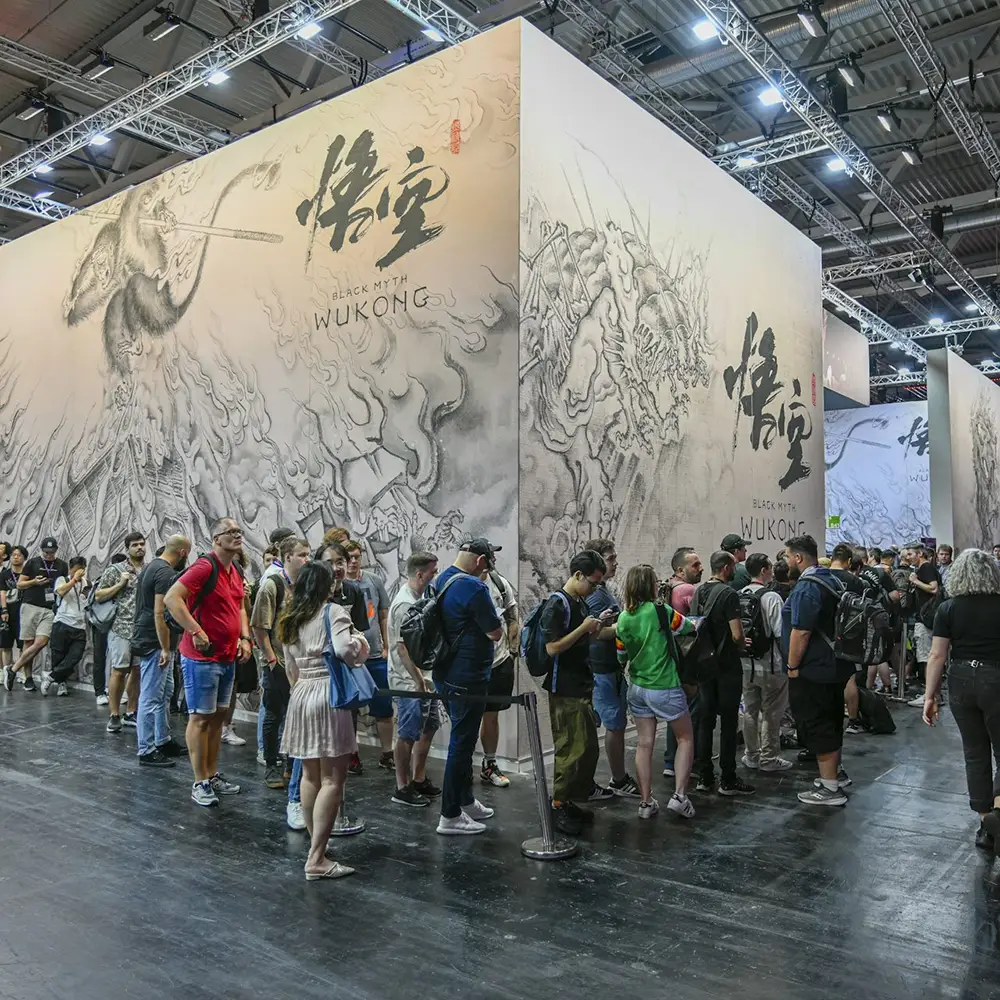
Michael Naparstek in ‘The Conversation’: A video game based on the Chinese novel ‘Journey to the West’ is the most recent example of innovative retelling of this popular story

The recent launch of the video game “Black Myth: Wukong” has broken numerous records around the world for the number of users. The game is set in the world of the famous Chinese novel “Journey to the West,” where players battle gods and demons of traditional popular Chinese religion. In the first few weeks following its release on Aug. 19, 2024, “Black Myth: Wukong” had reportedly sold over 18 million copies, making it one of the fastest-selling games of all time.
Players take on the role of freeing Sun Wukong, the monkey protagonist from the popular 16th-century novel. The story details the journey of the Chinese monk, Xuanzang, as he makes his way to India in search of Buddhist scrolls. Sun Wukong aids the monk in this trip. Yet, the monkey proves to be the ultimate troublemaker, as Sun Wukong insults popular gods of the Chinese pantheon and insists on besting them in magical battles. Sun Wukong’s fate is sealed when the Buddha imprisons him under a mountain as punishment for all the havoc he created in Heaven.
The video game picks up after the end of the story, pitting the player against those whom Sun Wukong had fought in the popular narrative. In so doing, the game continually references the complex and competitive world of traditional Chinese religion in which Buddhist, Taoist and popular gods are always interacting with one another.
As a scholar of Chinese religion, I am interested in the ways narratives of Chinese deities become popular and spread across different contexts. The popularity of “Black Myth: Wukong” is the most recent example in a centuries-old tradition of retelling this story through popular media.

Many stories, many versions
“Journey to the West” was first published in 1592, but the stories were popular long before that.
As scholar of Chinese literature Anthony Yu notes, the various tales describing Xuanzong and Sun Wukong’s adventures existed for nearly 1,000 years before they were collected and published in “Journey to the West.” People in traditional China would hear many of these adventures through oral storytelling, but also through various media such as dramatic performances, poetic tales and short stories.
Traveling opera troupes were one of the most popular ways to tell Sun Wukong’s tale. Professional actors would perform tales of Sun Wukong’s exploits through dramatic renditions coupled with acrobatic fight scenes and dazzling displays of martial arts. These entertaining performances would disseminate information about the gods to both literate and illiterate audiences all throughout China.


Stories of Sun Wukong’s mischievous, and often irreverent, behavior made their rounds throughout traditional Chinese society. The monkey hero’s brash attempts at subverting authority and picking fights with divine personae cemented his place as a popular cultural icon. As scholar of Chinese religions Meir Shahar notes, novels such as “Journey to the West” served as a way to define and transmit an entire pantheon of deities all across the various regions of traditional China.
In so doing, these forms of media would reflect the dynamic world of Chinese religion and, at the same time, help shape the way people would come to understand the stories of their own gods.
Impact on Chinese religions
Many of the characters who appear in “Journey to the West” come directly out of the Chinese pantheon. Guanyin, the Buddhist deity of compassion and one of the most popular gods across East Asia, has her struggles against Sun Wukong; Taoist figures, such as the deified Lao-tzu, the purported author of the Taoist classic “Tao Te Ching,” battles with the monkey, and ancient Chinese deities like the Queen Mother to the West and the Jade Emperor play a prominent role as authority figures throughout the story.
Sun Wukong also battles localized gods like the martial deity Erlang. Many of these figures are also referenced throughout the video game, while some, like Erlang, appear as “bosses” who need to be defeated before moving on to the next level.
In the novel, the gods work together to stand in the way of Sun Wukong, representing the authority of the Chinese pantheon. At the same time, Sun Wukong often gets the better of the gods, either through trickery or martial prowess. Eventually, the authority of the gods wins out, with the monkey trapped under the mountain. Yet, this is not the end of Sun Wukong. As the recent release of the video game demonstrates, it is but one more beginning to the monkey’s story.
While the game is careful not to promote any one religious identity, the cultural source for these compelling characters remains deeply rooted in the long history of Chinese religions.
Today’s gamers get to encounter aspects of Chinese culture in a whole new way. Players who may be unfamiliar with Sun Wukong’s character from the novel can still see Sun Wukong flip in the air, brandish his weapons and defeat his enemies with dramatic flair. Only now the gamer gets to perform these feats through their connection with the video game’s hero.
Still, while the gaming experience may be relatively new, enjoying tales of the gods is very old.
Michael Naparstek, Lecturer in Religious Studies, University of Tennessee
This article is republished from The Conversation under a Creative Commons license. Read the original article.


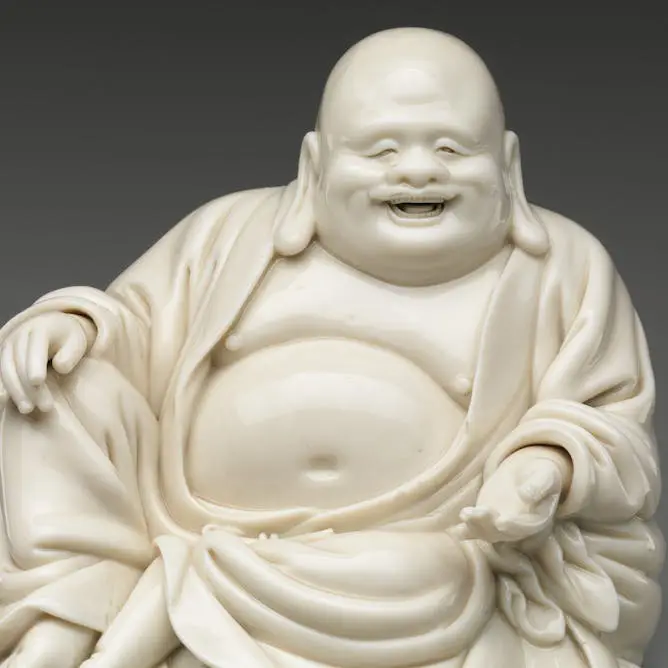
Megan Bryson in ‘The Conversation’: Who is the ‘Laughing Buddha’? A scholar of East Asian Buddhism explains
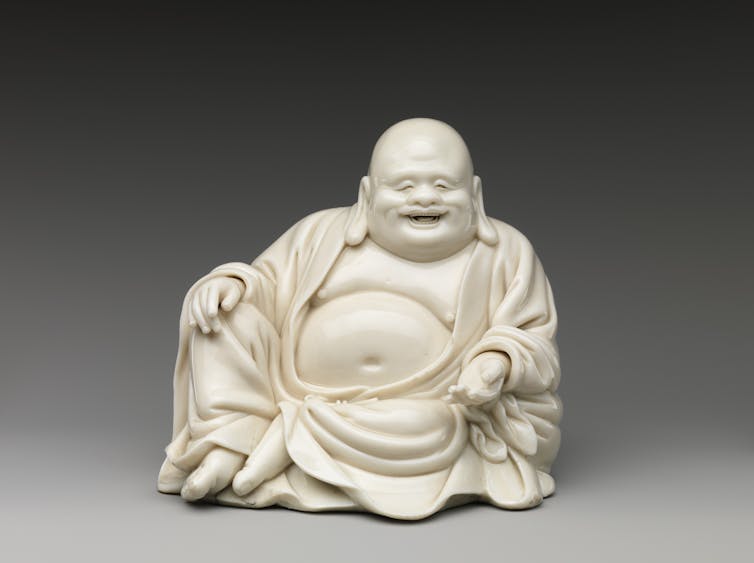
With his delighted expression, round belly, bald head and monastic robes, the “Laughing Buddha” is instantly identifiable. However, astute observers might wonder why this buddha does not look like the historical Buddha, who lived in India about 2,500 years ago.

Images of the historical Buddha, known as Siddhartha Gautama or Shakyamuni, depict him with a neutral expression, slim build, tightly coiled hair and monastic robes. If the Laughing Buddha isn’t the historical Buddha, who is he, and how did he become so popular?
As a scholar of East Asian Buddhism who studies how and why deities transform over time, I see the Laughing Buddha as a key figure that shows how people have adapted Buddhism to different cultural and historical contexts.
The Zen monk who became the Laughing Buddha
One of the names for the Laughing Buddha is “Cloth Bag,” which is pronounced “Budai” in Chinese and “Hotei” in Japanese. Cloth Bag was the nickname of a Chinese Buddhist monk who lived in the 10th century. He belonged to the Zen school of Buddhism, which is known for its stories about monks who reject conventional pursuits like wealth and fame.
Cloth Bag got his nickname because he wandered from town to town carrying a cloth bag full of treasures that he shared freely with children.
Chinese Buddhists, seeing Cloth Bag’s legendary generosity, compassion and joy, concluded that he must not be an ordinary monk, but that he must be a human incarnation of the future Buddha, whose name is Maitreya. Artists in China depicted Cloth Bag as a plump, laughing monk often surrounded by children or animals. In a traditional East Asian context, his round belly represents his generosity and abundance, and also symbolizes the positive qualities of wealth and fertility.
From China, images of Cloth Bag as the Laughing Buddha traveled in two directions. They spread first in East Asia to countries such as Vietnam, Korea and Japan. Zen is a popular form of Buddhism in all of these countries, but it was Japanese Zen Buddhism that attained global popularity in the 19th and 20th centuries. This means that many images of the Laughing Buddha in the West are based on Japanese models.
Displaying Chinese porcelain
Images of the Laughing Buddha also spread west from China to Europe, where 18th-century elites showed their aesthetic sophistication by displaying Chinese-style porcelain, including statues of the Laughing Buddha.
The Laughing Buddha’s transformation into a global icon results from both the fascination with Chinese porcelain in 18th-century Europe and the 20th-century spread of Japanese Zen Buddhism.
Today we see the Laughing Buddha in stores, homes and even as a brand name. A lot of people may know what the Laughing Buddha looks like, but few may be familiar with who he is or how he became so popular.
Megan Bryson, Associate Professor of Religious Studies, University of Tennessee
This article is republished from The Conversation under a Creative Commons license. Read the original article.

Interdisciplinary Interpretations
by Randall Brown
Stephen Hay, from Greeneville, Tennessee, built a standout Vol experience double majoring in English and religious studies and minoring in the Women, Gender, and Sexuality Program. He has maintained a steady pace with this mix of studies, delivering substantial scholarship to close out his senior year.
“I am currently working on my honor’s thesis,” said Hay. “Outside of that I wrote a paper titled ‘Zhenwu and the Perfection of Daoist Masculinity in the Beiyou Ji,’ which I presented at the American Academy of Religion Southeastern Conference.”
Dawn Coleman and Anthony Welch, associate professors in the Department of English, praise Hay’s academic energy and his ability to make connections across various areas of study.
“Stephen is an outstanding student who brings a wonderful energy to the classroom,” said Coleman. “He’s a serious reader, writer, and thinker who offers insightful literary interpretations and responds thoughtfully to others. He deserves major kudos for presenting original work at an American Academy of Religion conference as an undergraduate.”
Welch enjoyed Hay’s contributions to his Shakespeare classes.
“When I asked my students to interpret a difficult speech, Stephen had an uncanny ability to grasp exactly what I wanted them to see in Shakespeare’s language,” said Welch. “His analysis of the plays in class was highly sophisticated and imaginative.”
Welch appreciated Hay’s nuanced and precise readings and the unexpected connections he made while examining Shakespeare’s work—translating the stories through the lenses of his dual major and minor.
“He took a special interest in questions of gender and power, but his approaches to the plays were diverse, nimble, and original,” said Welch. “Stephen is one of those rare students who combines a strong work ethic, a sophisticated critical imagination, excellent writing skills, and an ability to show intellectual leadership in the classroom.”
Following graduation, Hay will take some time off from academic endeavors to travel the world and learn a new language
“I plan to take a gap year and live in Taiwan,” he said. “While there I plan to learn Mandarin in preparation for applying to grad school in religious studies.”
He encourages future Vols to bring their own unique perspectives and immerse themselves in the varied possibilities for discovery at Rocky Top.
“The University of Tennessee is a special place where you matter and make a difference,” said Hay. “Don’t be afraid to be yourself here because the university thrives in diversity of experience, character, and thought. As such, use this chance to explore—take new classes and subjects, join campus organizations, and make UT your home.”
The College of Arts and Sciences congratulates Hay on his academic success as he sets out to share his Vol experience around the world.


The Conversation: What Taoism teaches about the body and being healthy
What Taoism teaches about the body and being healthy

New Year’s resolutions often come with a renewed investment in making our bodies healthier. Many may take to the newest diet plan or sign up for a health club membership, but it is worth taking some time to consider what actually constitutes a healthy, happy body.
Taoist visions of the body form a central part of my research. Taoism, (also spelled Daoism) an indigenous tradition of China, understands humans to be an integral part of the larger cosmos.
Rituals and bodily techniques are used to align one’s individual body with surrounding social and natural environments. These concepts of the body can inform individuals on their relationship with our environment and on what it means to be healthy.
Taoism, the body and cosmos
Accounts of Taoism begin sometime in the fourth century B.C.E., starting with the text “Tao Te Ching,” attributed to Lao Tzu. Though scholars do not believe there was an actual person called Lao Tzu, this figure, whose name means “old master” or “old child,” would become the model for bodily practice. Taoists would later develop rituals designed to mirror their body with that of Lao Tzu’s as a way to align themselves with the Tao, or the source of all things.
Taoist texts described Lao Tzu’s body as a kind of map for the entire cosmos, visualizing their own individual body like a smaller version of the entire cosmos, and likening the entire cosmos to a larger mirror of one’s own body. Bringing one’s body in alignment with the cosmos was understood to grant Taoists the ability to transform the environment around them by transforming their own bodies.
What happened in the body was understood to have an effect on the entire universe, just as the environment has an effect on one’s body.
Physical exercises for longevity
Some of the earliest examples of Taoist practices describe a series of body movements and postures to help align one’s body with their environment.
Historian of Taoism, Isabelle Robinet, notes that dating back to the second century B.C.E., the physical exercises were used to help cultivate one’s qi, or breath, in order to better achieve harmony with the patterns of nature, nourish one’s health and increase longevity. Contemporary practices such as qigong continue to be informed by these concepts to this day.
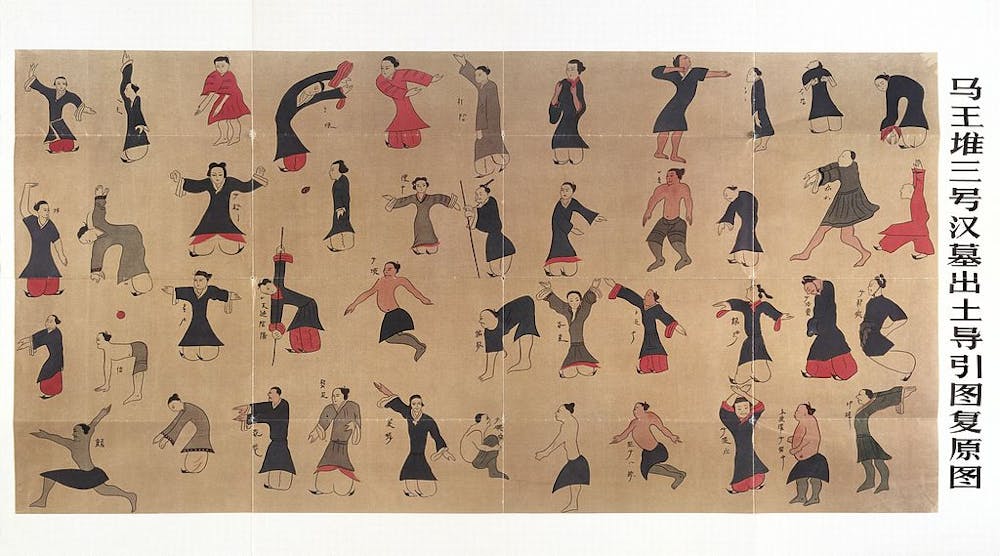
In addition to practicing bodily techniques, early Taoists also sought out a connection to the environment through alchemy, a process of mixing rare natural elements together to create a refined substance that they believed was an elixir of health. According to renowned scholar of Taoist alchemy Fabrizio Pregadio, practitioners sought out rare and powerful elements from the earth, which they mixed and consumed in an attempt to attain longevity or even immortality.
Integrating with the outer landscape
By the eighth century C.E., Taoists would look inward for these alchemical benefits. Taoist masters developed meditative and bodily practices called “neidan,” or inner alchemy, to help replicate the landscape within their own body.
Rather than seeking out rare elements in the earth, inner alchemy taught how to find the power to refine one’s vital essences from within one’s own body.
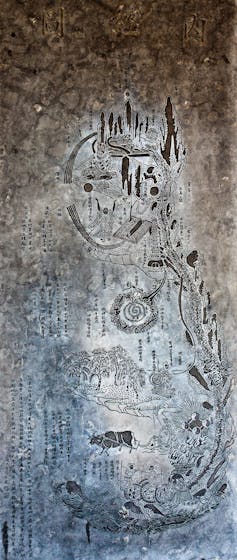

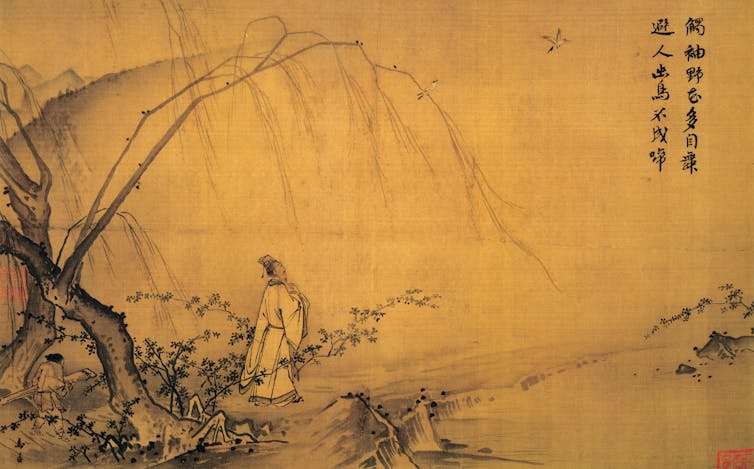
Fully developed ritual programs instructed Taoists to undertake an inner journey within themselves. Along the way, they would visualize their old self encountering temples tucked away within lush mountain forests, discover hidden grottoes, and even find divine figures mixing elixirs of immortality.
This internal climb was believed to eventually lead one’s old self to the peak located at the crown of one’s head. From there, Taoists would visualize a new immortal self emerging out from atop their skull.
Taoist priests and community
This concept of a body fully integrated with the cosmos informs the logic for how contemporary Taoist priests conduct rituals to benefit the broader community today.
According to Kristofer Schipper, a scholar of Taoist ritual, the body is seen as the primary medium that can fulfill their duty to reconnect the local community with the original source of the cosmos – the Dao itself.
Taoist priests will envision a different kind of journey, this time across the cosmos but still all within their own body. They seek an audience with the highest gods of Taoism, known as the Three Pure Ones, to whom they will report the merits of the local community.
It is understood that in so doing, the Taoist priest helps reaffirm the connection between the people and the Tao itself. Thus, the community becomes integrated into the “Taoist Body.”
While an audience with the purest forms of the Tao is reserved only for trained Taoist priests, notions of the Taoist body ultimately provide a way for everyone to understand one’s body to be transformed both inside and out.
As the new year brings new resolutions for healthier bodies, we may gain from added perspectives on what transforming our body can mean – not just for ourselves, but for those around us.
Michael Naparstek, Lecturer in Religious Studies, University of Tennessee
This article is republished from The Conversation under a Creative Commons license. Read the original article.