• Request Info
  • Visit
  • Apply
  • Give
  • Request Info
  • Visit
  • Apply
  • Give

Search

A-Z Index Map

Religious Studies

  • About
    • Newsletters
  • Student Experience
    • Upcoming Courses
    • Online Classes and Programs
    • Declare a Major/Minor
    • Advising
    • Hands on Experience
    • Study Abroad
  • Majors & Minors
    • Religious Studies
    • Religion & Nonprofit Leadership
    • Religious Studies Honors
    • Minors
    • Graduate Programs
  • Alumni and Friends
    • Alumni Awards and Spotlights
    • Board of Visitors
    • Awards & Spotlights
  • People
    • Faculty
    • Emeritus
    • Staff
    • Faculty Spotlights
  • Events & Programs
    • Anjali Lecture in Hindu Studies
    • Siddiqi Lecture in Islamic Studies
    • Distinguished Lecture in Religious Studies
    • Karen and Pace Robinson Lecture in Judaic Studies
    • The Fern and Manfred Steinfeld Program
Author: Kaitlin Coyle
Megan Bryson

Bryson Awarded Lindsay Young Professorship

July 28, 2026 by Kaitlin Coyle

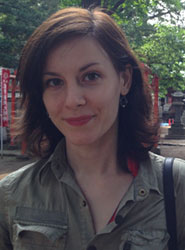
Megan Bryson, associate professor in the UT Department of Religious Studies, has been awarded a Lindsay Young Professorship. 

Megan Bryson

Bryson is an established scholar of the themes of gender and ethnicity within Chinese religion. Her research focuses specifically on the religions of the Dali region of Yunnan Province, examining how religion has shaped Chinese identity. In this, she deciphers the limitations of the terms “Chinese” and “non-Chinese” in the traditions of East Asia.

Her monograph, Goddess on the Frontier: Religion, Ethnicity, and Gender, was published in 2016, exploring the worship of a local deity in Dali beginning in the 12th century. She has also published numerous journal articles in academic journals on the subjects of religion and gender in East Asian regions, including “Journal of the International Association of Buddhist Studies, Signs: Journal of Women in Culture and Society”.

Along with teaching classes on East Asian religions, she is working on another monograph studying Buddhist transmission along the Silk Road. Bryson also contributed to creating the new religion and nonprofit leadership major concentration and minor for the Department of Religious Studies.

Established in 1980 by Knoxville lawyer Lindsay Young, these endowed professorships reward faculty who are outstanding teachers, researchers, and public servants. Ten awards are made each year: one in law, one in veterinary medicine, and eight in the humanities.

 by Sloan Docekal 

Filed Under: Featured

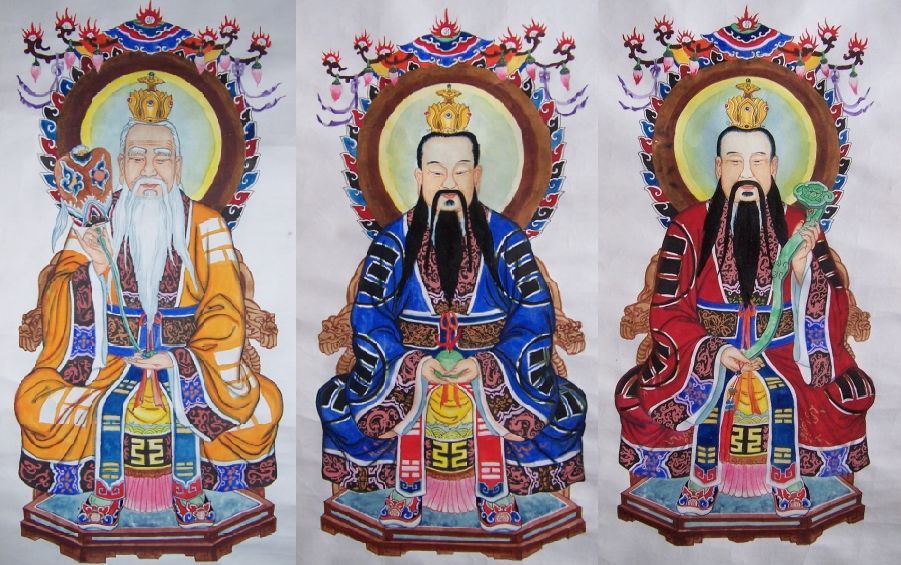
Three religious deities depicted side-by-side in an illustration from Doism, an indigenous religion from China.

From ancient texts to modern practices, Daoism provides a profound framework for understanding the world not as broken but as naturally seeking balance

July 10, 2026 by Kaitlin Coyle

Three seated deities, one with a long, white, flowing beard, with small crowns on their heads.
The ‘Three Pure Ones,’ the deities considered the most pure representation of the Dao. Unknown author via Wikimedia Commons
Michael Naparstek, University of Tennessee

Daoism, China’s indigenous religion, is one of the country’s five officially recognized religions today. Practiced by millions of people in China and around the world, Daoism takes on many forms, stretching back from ancient roots to the modern world.

It challenges the conventions of how people often define religion. Unlike many other faiths, Daoism does not necessarily center on a deity, though there are many Daoist deities. Nor does it have a unified system of beliefs or follow a singular authoritative doctrine.

In fact, followers say the Dao, which literally means the “way,” cannot be truly explained. Rather, it is often viewed as something like a mysterious, balanced cosmic force. Daoist practices, then, are based on the premise that everything that makes up the world emanates from the Dao.

Daoism approaches the world not from the perspective that the world is broken or needs to be saved, but rather that it is naturally balanced. When things go wrong, Daoist, also referred to as Taoist, practice seeks to bring the world back into harmony with the Dao.

As a scholar of Daoist ritual, I am interested in the diversity of Daoism’s ideas and practices. These include rituals related to cosmic realms, guidance for navigating the challenges of daily life and even the worship of powerful deities. Many of these practices stretch back thousands of years, offering a window into China’s religious and cultural past.

The Dao

Early textual sources describe the Dao not in terms of what it is but rather what it does.

The Daodejing – “The Classic of the Way and its Power” – is the first known text to articulate the Dao as the source of all things. Composed sometime during the fourth century B.C.E. by the legendary figure Laozi, it states, “The Dao begets the One, the One begets the Two, the Two begets the Three, the Three begets the 10,000 things.” In other words, everything we can see and know can be traced back to the Dao.

Intentionally vague and obscure, the Daodejing would go on to inspire various interpretations ranging from philosophical reflections to how to realize the Dao in everyday practice.

Other early texts describe the Dao through illustrative anecdotes. For example, the fourth century B.C.E. author Zhuangzi describes the Dao through often humorous anecdotes. One of the most well-known vignettes asks whether a dozing Zhuangzi dreams that he is a butterfly or whether he is a butterfly dreaming that he’s Zhuangzi.

A black-and-white sketch of a man with a flowing beard seated in contemplation, with a butterfly hovering above him.
Zhuangzi’s ‘Dreaming of a Butterfly,’ by 18th-century Japanese painter Ike no Taiga. Ike no Taiga (1723–1776) via Wikimedia Commons

Through deceptively simple illustrations, the book attributed to Zhuangzi, which is also known as the “Zhuangzi,” artfully raises complicated questions on the relationship between our world and how we know what we think we know.

Balancing with the Dao

While Daoism asserts that the world is naturally balanced, it recognizes that sometimes it gets out of order. This is where Daoist practice steps in to help.

Daoist practice includes sophisticated rituals and visualization techniques to align one’s own body with the rhythms of the world. Practitioners understand their own bodies to be a microcosm of the entire cosmos based on the idea that everything stems from the same Dao.

Daoists believe these practices help their own longevity and also rebalance the world at large through their connection to the Dao.

Daoist ideas of alchemy play an important role in this relationship. In general, Daosist alchemy is understood as distilling elements of the world into potent spiritual essences. Daoist specialized practices aim to recombine those essences – known as “jing” – into spiritual potency.

In its earliest forms, beginning in the second century B.C.E., Daoist alchemical practices would mix rare ingredients from the earth to transform them into what they believed to be “elixirs of immortality.”

Subsequent centuries witnessed these practices moving away from physical ingredients, such as rare plants and minerals, to become more focused on visualization techniques. This form of “inner alchemy,” or “neidan,” does not use actual ingredients but rather focuses on distilling the spiritual essences within one’s own body to achieve immortality.

An intricate white line drawing on a black background.
An illustration of the inner alchemy, or ‘neidan,’ depicting what Daoists believe to be the landscape inside one’s own body and how one can visualize the figures within. Neidan via Wikimedia Commons

To do so, practitioners of “inner alchemy” would call upon new hosts of Daoist deities to aid them in their internal processes.

Daoist figures – deities and masters

There is no single, authoritative Daoist collection of deities. Rather, various Daoist traditions have their own preferred deities they revere based on their own particular histories and practices.

Still, some figures appear across pantheons. The Three Pure Ones, known as the Sanqing, are understood to be the most pure representation of the Dao. They consist of three figures, including Laozi, who often appear in rituals on painted ritual scrolls as Daoists seated on imperial thrones.

These three deities are thought to be personifications of the Dao who inhabit the highest realms of the Daoist cosmos, far from the dust of day-to-day life. To reach them, Daoists perform rituals to take the long journey all the way to the court of the Three Pure Ones in order to have an audience and report on the merits of the community.

Some Daoist communities refer to Laozi as “Lord Lao Most High,” or “Taishang Laojun.” The earliest Daoist community, known as the Celestial Masters, believed that their founder, Zhang Daoling, had made a special contract with the deified Laozi that would protect them through a cataclysmic end of times.

As the influence of the Daoism of Celestial Masters spread, Zhang Daoling would also come to be seen as a powerful deity in his own right, often depicted with bulging eyes and wearing a red robe, accompanied by a tiger.

One of the most mysterious Daoist deities is the popular Perfect Warrior, or Zhenwu. Zhenwu’s roots stretch back to ancient days as the god of the North, when he was often depicted as a turtle entwined with a snake.

Later on, Zhenwu took a human form, often shown wearing robes or armor, with long black hair flowing behind him, bare feet, and holding a sword or banner emblazoned with the Big Dipper.

A colorful painting of a seated Chinese deity, surrounded by  attendants and other divine figures.
Zhenwu, god of the North. George and Mary Rockwell Collection, Herbert F. Johnson Museum of Art via Wikimedia

By the Ming dynasty, which ruled from 1368 to 1644, Zhenwu had become the patron deity of the imperial household. Known for his command of ferocious demon-quelling deities, Zhenwu remains a popular deity in Daoist exorcist rituals in places such as Taiwan.

Daoism also incorporates many deities from Chinese mythology and other religious traditions, such as Buddhism. Among the most prominent are the popular Eight Immortals, whose wild adventures often culminate with a lesson on the natural order.

Other ubiquitous Chinese deities, such as the regal Jade Emperor, the faithful warrior Guan Yu, the wondrous savior Mazu, and the demon-quelling Zhong Kui, fill both the popular imagination and the stuff of Daoist ritual.

A painting of a man seated in an open palanquin carried by attendants on either side.
Portion of a scroll entitled ‘Zhong Kui Traveling with his Sister,’ by Gong Kai, an artist said to have lived from 1222-1304. The University of Washington via Wikimedia

Many of these figures can now be found in movies, books and even video games, but they have their roots in the rituals and myths of Daoism.

The various forms of Daoism today

Throughout its history, Daoism never lost touch with the local traditions. Local gods and even vengeful ghosts come to be incorporated into Daoist pantheons, where they now serve to keep troublesome spirits from upsetting the community. As a result, Daoism continues to be an integral part of everyday life.

In places such as Taiwan, Daoist priests can be seen today conducting rituals at community temples and annual festivals. In mainland China, Daoism continues to be practiced in some of the most important and ancient sites of Chinese culture, such as the eighth-century “White Cloud Abbey” in Beijing.

Meanwhile, those outside China remain fascinated by Daoism, as well, with new translations of the Daodejing hitting the market every year.

As such, Daoism maintains its complex and diverse nature well into the modern era, still striving to bring it all back into balance with the Dao.The Conversation

Michael Naparstek, Associate Teaching Professor Religious Studies, University of Tennessee

This article is republished from The Conversation under a Creative Commons license. Read the original article.

Filed Under: Featured

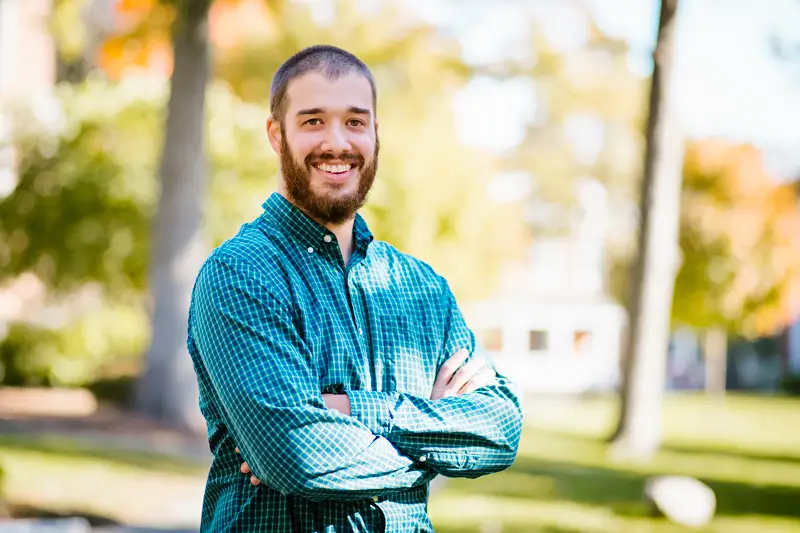
Max Aba.

Aba Receives Fellowship for Global Leaders

July 1, 2026 by Kaitlin Coyle

Max Aba.

Max Aba is majoring in religion and elementary education as he aims for a career that will allow him to help others.

Max Aba is one of three UT students named to the inaugural cohort of the Future Talent Council’s Global Student Fellowship Program, preparing undergraduate and graduate students to be leaders.

With a double major in religious studies and elementary education, he is among the 31 students from 10 countries and 14 universities participating in the six-month fellowship that will connect them with global leaders in education and industry. 

UT is a partner in the program, and Aba chose the university for his undergraduate studies because of its top-tier education program. “I wanted a school that was going to give me a lot of flexibility in what I could pursue with my degree,” he said. 

Aba spent the spring semester in 2026 at the University of Manchester in England studying religion and theology as an exchange student. 

Putting History in Context

As a senior in high school, he became curious about studying Christian denominations outside of his own. “That interest spread to other religions, and I became fascinated with the different ways people tell stories to communicate truths about the world that lie beneath our everyday experience,” he said. “Studying religion allows me to observe and learn about the historical and cultural context that has produced some of the most influential stories in human history.” 

In fall 2025, he enrolled in Professor Tina Shepardson’s New Testament and Christian Origins course through the Department of Religious Studies. She surprised Aba by offering him the option to write a research paper instead of taking the final exam. 

“I had never thought of doing my own research this early, but seeing her confidence in my skills gave me confidence that I could do it,” he said. 

Support for Research, Travel

Traveling to the United Kingdom is Aba’s third opportunity to study abroad, after a week in Puerto Rico and spending the summer of 2025 in Tokyo through a Gilman Scholarship that allowed him to study the Japanese education system. Aba used an Advanced Undergraduate Research Activity (AURA) award to study five people who had grown up in the Chinese education system and presented his work during UT’s Discovery Day, which showcases undergraduates’ research and creative activity. 

He received the Department of Religious Studies’ 2026 Undergraduate Research Award for his paper, “Remembering Jesus for a Reason: Social Memory, Communal Needs, and Identity Formation in the Four Gospels.” A second AURA award, for summer 2026, will allow him to continue research with Shepardson.

Aba also has received support through the UT Promise on Rocky Top, the Wesley Foundation, the UT’s Center for Global Engagement, Office of Undergraduate Research and Fellowships,  and Division of Access and Engagement. “UT has so many amazing resources, and I am grateful to be a part of this university,” he said. 

Aba plans to also pursue a master’s degree in teaching from UT to become an elementary school teacher, and perhaps ultimately earn a doctorate in theology or the New Testament. “My goal in life is to help people,” he said. 

Filed Under: newsletters

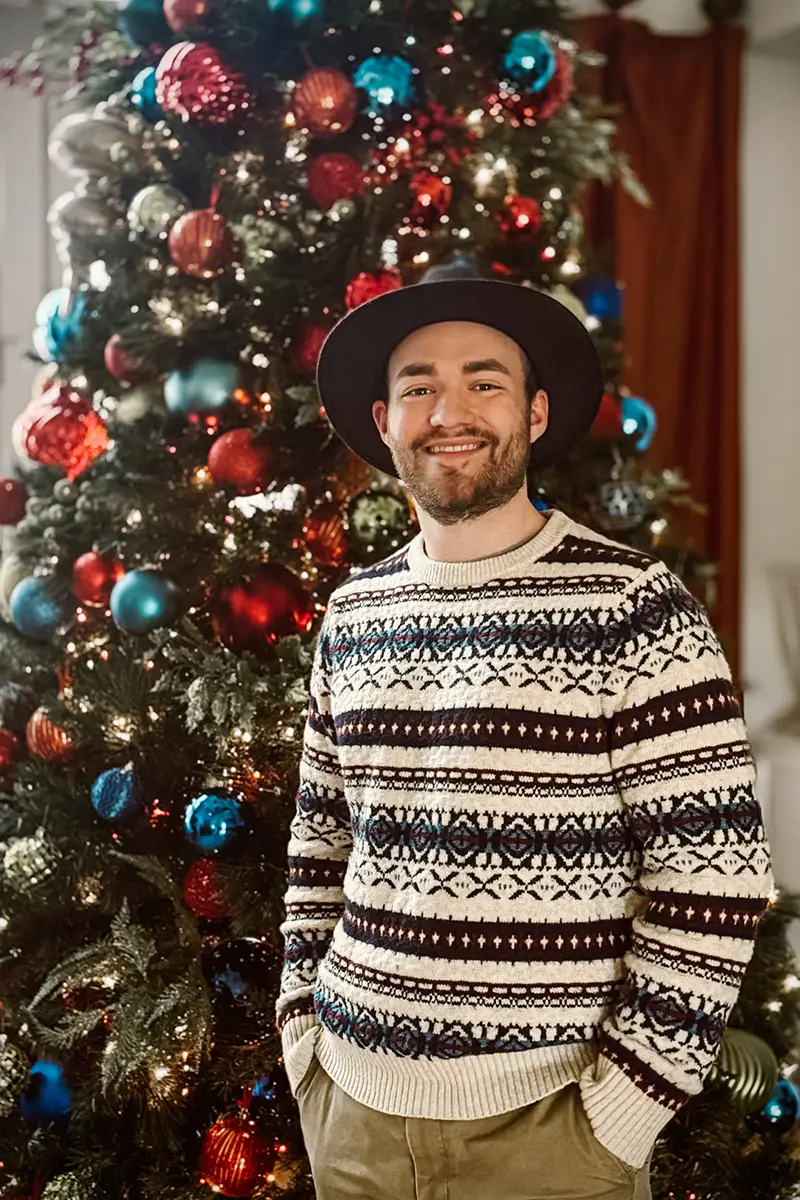
Brant Entrekin pictured in front of a Christmas tree.

At the Intersection of Religion and Philosophy

July 1, 2026 by Kaitlin Coyle

Brant Entrekin pictured in front of a Christmas tree.

On his way to earning a PhD in philosophy, Brant Entrekin became one of the first UT students to earn a graduate certificate in religious studies.

Brant Entrekin chose UT for his doctoral studies in philosophy because of the faculty and opportunities for interdisciplinary research that the university encourages.  

“As someone coming right out of undergrad into a PhD program, it was important for me to enmesh myself into a diverse, interdisciplinary community to experiment with and foster new research interests,” he said.

In spring 2025, he became one of the first two students to earn the new graduate certificate in religious studies from UT, along with Carson Wright.

In the Department of Religious Studies, Entrekin benefitted from the mentorship of Lindsay Young Associate Professor Megan Bryson and Associate Teaching Professor David Kline.

“Dr. Bryson really encouraged me at the beginning of the graduate certificate and helped me gain a better sense for how I should approach my scholarship in religious studies,” he said. “Dr. Kline was an excellent instructor who helped me think through how to connect my philosophical interests with my work in religious studies. Thanks to the guidance from both of them, I was able to get two publications in religious studies journals that began as projects from courses I was in with them.”

As an undergraduate, Entrekin became interested in philosophy of religion from the American pragmatist tradition and the existential tradition. “A true turning point in my interests in religious studies came from reading William James’s The Varieties of Religious Experience,” he said. “My thinking turned towards broader questions about the multifaceted ways in which people connect to the divine and the lived experience of religion. This guided me into broader questions in religious studies, where my interests shifted from abstract, philosophical reflections on God to more concrete, embodied questions about how religious activity provides frameworks by which people understand and interpret their lives.”

As a graduate student at UT, Entrekin has made presentations at many conferences. “That experience has helped shape a lot of my research goals and connected me with a very broad network of scholars,” he said. “My current dissertation project is on allyship in social justice movements, and I arrived at that project through the discussions at various conferences.”

Now a doctoral candidate in UT’s philosophy department, he expects to defend his dissertation in 2028 and then pursue a career in academia, to continue teaching and research. “My dream is to find a position within a university that has a joint philosophy-religious studies department so that I can continue to work at the intersection between the two,” he said.

Entrekin is passionate about teaching and has been an instructor at both UT and Pellissippi State Community College. “My experience at both  institutions has given me the chance to experiment with new kinds of assessments—including having students make philosophy TikToks—and the ability to construct courses that reflect my own scholarly interests,” he said. At Pellissippi State, for example, his introduction to world religions course is taught via a lived religions methodology where students apply those skills to research and present on a new religious movement. 

Filed Under: newsletters

Hunter Bragg pictured outside in nature.

Religion, Crime, and Punishment

July 1, 2026 by Kaitlin Coyle

Hunter Bragg pictured outside in nature.

Assistant Teaching Professor Hunter Bragg explores the intersection of religious values and the criminal legal system, and UT students will join his research.

Assistant Teaching Professor Hunter Bragg is leading research on the connections between Christian concepts like “forgiveness” and alternative forms of accountability and repair in the criminal legal system.

Working with UT’s Appalachian Justice Research Center (AJRC), Bragg is measuring the experience of East Tennesseans who have been harmed by serious violence. Interviews and surveys of people who experienced assaults, robberies, and other crimes also will inquire about their needs for healing. 

“I’ll be asking, for instance, whether a person who is recovering from a violent assault desires harsh punishment for the responsible party, assurances of future safety, an explanation and apology from the wrongdoer, some other form of restitution, or some combination of these,” Bragg explained. “I will ask, further, whether there are connections between the types of justice they desire and their religious values, commitments, and practices.” 

He also is partnering with the Raphah Institute, a nonprofit organization based in Nashville that supports people harmed by serious violence and guides responsible parties through meaningful accountability and repair.

Students from across the university will work with Bragg and the institute through a course with the Appalachian Justice Research Lab, conducting, coding, and interpreting the research.

“My hope is that students interested in law, policy, and/or the role of religion in public life will be drawn to this course and will gain a sense of how they might be able to contribute to positive and meaningful change in the world,” the professor said.

Raphah Institute is working on policy proposals for the Tennessee legislature that would expand accountability and repair access throughout the state, so the work also will give students a front-row seat to policy work, Bragg said.

“The best kind of academic research and the best kind of teaching challenges our assumptions about the world—like, say, whether locking people up actually makes the rest of us safer. The value of this work is that we come to have respect for many different positions and that we learn to hold our positions with humility,” Bragg said. “I’m grateful to be in a position to help students engage in that work of self-reflection here at UT.”

As a graduate student, Bragg realized how religion is infused in American society, and a seminar on the death penalty convinced him that the practice has roots in religious ideas of punishment. 

“A few years later, I read Michelle Alexander’s The New Jim Crow and realized that there was a theo-logic to the practice of incarceration in the US,” he said. “I wanted to explore how that logic works, both intellectually, in the kinds of reasons we give for why punishment is necessary, and materially, in the lives of those who are affected by that punishment.”

Currently Bragg also is working on a book that examines plea bargains as a confession ritual. “It uses ritual theory to consider how plea-bargaining transforms defendants into criminals and justifies their punishment at the hands of the state,” he said.

Filed Under: newsletters

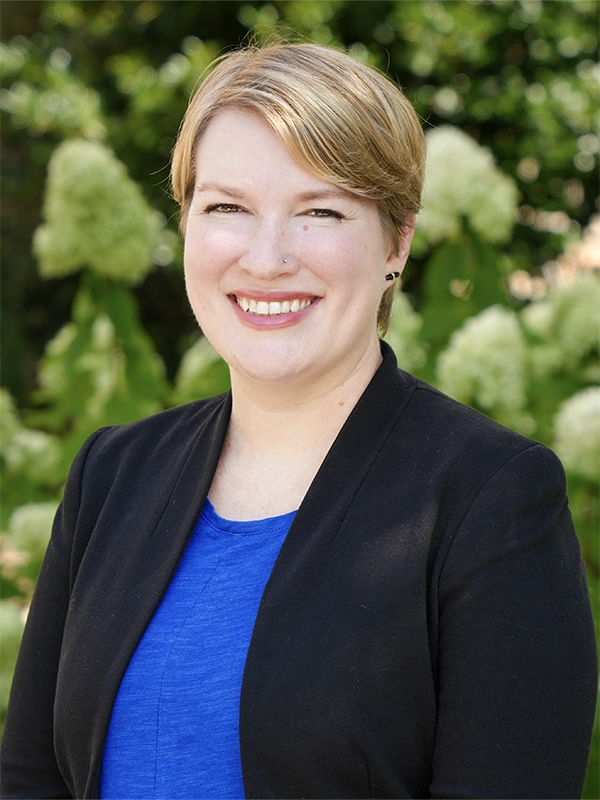
Headshot of Rachel Schneider

Religion in Public Life

July 1, 2026 by Kaitlin Coyle

Headshot of Rachel Schneider

Assistant Professor Rachel Schneider examines how religion shapes communities and is working with organizations in Knoxville to prepare students for nonprofit leadership.

Rachel Schneider joined UT’s Department of Religious Studies in 2025 as an assistant professor of religion and public life. She is part of a strategic, interdisciplinary hiring initiative from the College and Arts and Sciences, “Envisioning and Narrating Emerging Futures,” aimed at enhancing student success while making life and lives better for people in Tennessee and beyond.

“Much of my academic work is built around helping students and the public see the ways religion shapes the communities around them,” Schneider said. “It asks how religion shapes public life—from workplaces and healthcare to civic engagement and nonprofit leadership—and how religious communities respond to enduring social challenges such as racial and economic inequality.”

She is co-leader on a research project funded by the Arthur Vining Davis Foundations that studies how religious leaders identify and address pressing social needs in their communities, such as food insecurity, mental health care, or access to affordable housing, and how interfaith collaboration can strengthen these efforts.   

Community Nonprofit Connection

Rachel Schneider stands in front of a podium at the American Academy of Religion Conference. A sign on the podium reads "Signature Boston. Remarkable experiences. Imagination realized."
Assistant Professor Rachel Schneider speaks at the American Academy of Religion Conference.

Schneider is also co-director of the department’s religion and nonprofit leadership undergraduate program, with Lindsay Young Professor Megan Bryson. In that position, she’s building relationships with Knoxville religious and civic leaders. 

“There is a rich history of religious and civil leaders partnering to support community flourishing, and I’m excited to connect students with local nonprofit leaders and faith-based organizations so they can learn directly from practitioners,” she said. “In the coming years, I look forward to deepening connections between UT and the wider community to find ways the academic study of religion can enrich and support their work.” 

In addition to teaching the Religion and Nonprofit Leadership and Religion and the Workplace courses, Schneider would like to develop a course on religion and international development.  

“My hope is that this course will create a focused space for thinking about nonprofit work and humanitarianism on a global scale, because students are increasingly interested in global service and ethical modes of engaging in development work,” she said. 

“It is an exciting moment to be part of a department that is growing, innovative, collaborative, and deeply committed to students,” Schneider said. “I hope my work at UT will tackle hard questions and pressing social challenges with academic rigor while also equipping students with the leadership skills and insights they need for professional success in a changing world.”

Christianity in South Africa

Being a Denbo Center for the Humanities and the Arts Faculty Fellow in 2026-2027 will allow Schneider to focus on completing a book about contemporary Christianity and racial inequality in South Africa. 

She traveled to South Africa as an undergraduate to learn about racial reconciliation and peacebuilding. “As I began to ask critical questions about the use of Christianity in both South Africa and the United States to perpetrate racial injustice, I was also struck by the presence of religion in the anti-apartheid and US Black freedom struggles and the ways sacred symbols and rhetoric have been deployed by marginalized communities in both these contexts to imagine—and work for—a better world,” she said.

Filed Under: newsletters

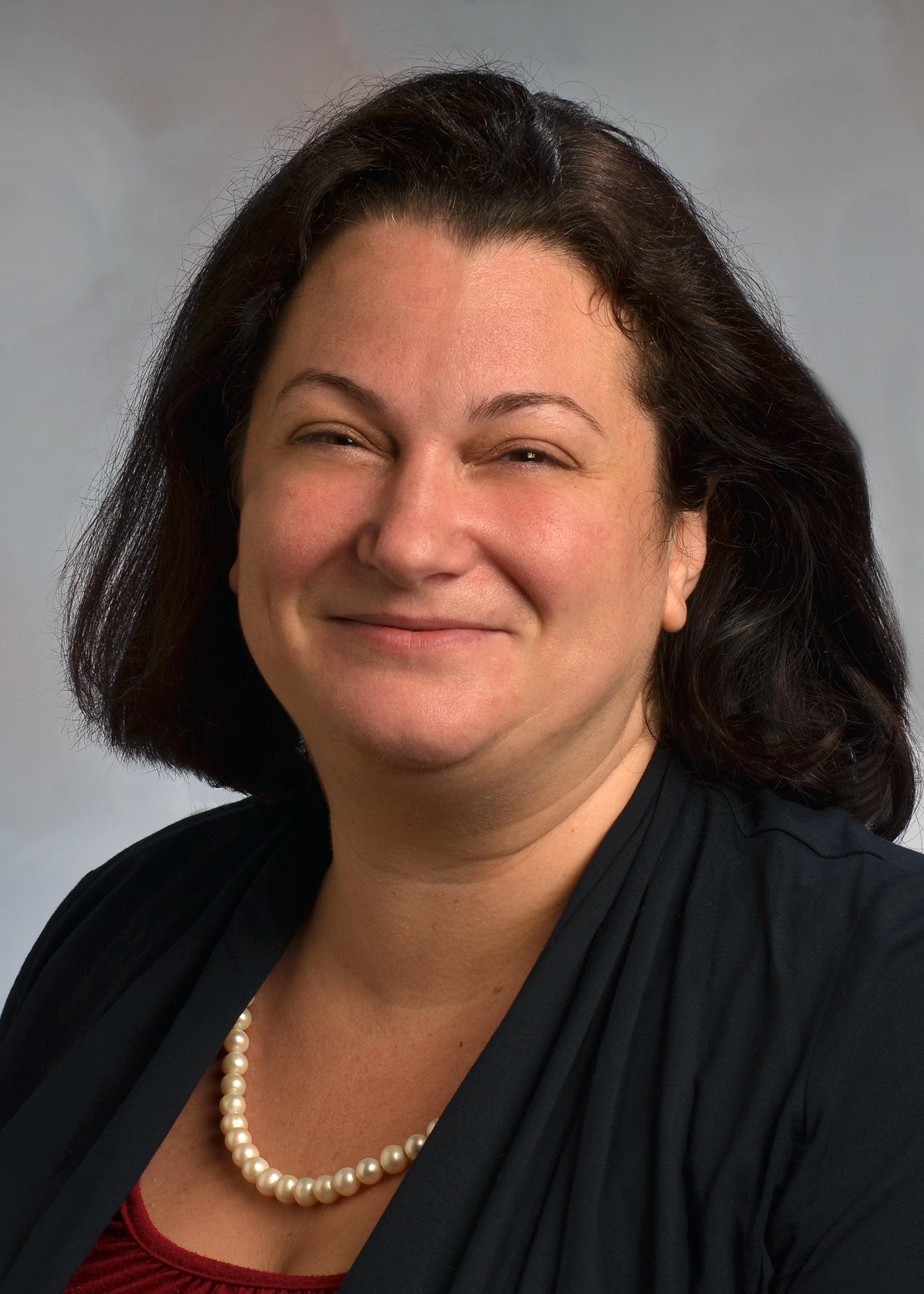
headshot photo of Helene Sinnreich

Scholarship and Student Experiences Are on the Rise

July 1, 2026 by Kaitlin Coyle

headshot photo of Helene Sinnreich

Department Head Helene Sinnreich highlights what’s new in student programs, faculty research, and more

I am very excited to say that this spring I was in Poland with a group of exceptional students on the inaugural Frankel-Ricketts Global Scholars program trip! 

Sixteen students visited Jewish sites and Holocaust sites in Poland as a result of an incredibly generous gift from Dan Rickets and Steve Frankel. Their support includes an estate gift that will enable the program to expand and continue. Dan and Steve were honored by the College of Arts and Sciences this year as philanthropists of the year—a well-deserved recognition. 

Not only does philanthropy to our department enable amazing trips for students, but it also supports many of our programs, including our endowed lectures. 

This past year we once again hosted the Siddiqi endowed lecture in Islamic Studies, with a presentation by Mohammad Ballan. We welcomed Shari Rabin for a talk on the Jewish South for the Abraham and Rebecca Solomon and Ida Schwartz Distinguished Lecture on Judaic Studies and hosted Oded Nir for a series of lectures as our Karen and Pace Robinson Scholar in Residence. The Anjali Lecture in Hindu Studies featured Sugata Ray. 

Another piece of exciting news is the arrival of our new colleague Assistant Professor Rachel Schneider, who has filled our position in religion and public life. We are thrilled that she has already been awarded a Denbo Center for the Arts and Humanities fellowship for next year. Associate Professor Erin Darby had a fellowship at the Denbo Center during the 2025-2026 academic year, and Assistant Professor Marcus Harvey returned to the classroom after his Denbo fellowship the previous year. Our faculty’s repeated receipt of this competitive award is a testament to the research excellence in the department. 

Speaking of awards, Megan Bryson was appointed again as a Lindsay Young Professor for another term. This prestigious award recognizes excellence in scholarship and teaching. Additionally, our department’s most prestigious accomplishment was the receipt of the Dr. Marva Rudolph Access and Engagement Unit Excellence Award for 2025. We are proud of the community-engaged work that led to this recognition.

Our faculty has been extremely research productive this past year with several books coming out, including Assistant Professor Manuela Ceballos’s Between Dung and Blood: Purity, Sainthood, and Power in the Early Modern Western Mediterranean (University of California Press, 2025), Distinguished Professor Christine Shepardson’s A Memory of Violence: Syriac Christianity and the Radicalization of Religious Difference in Late Antiquity (University of California Press, 2025), and Teaching Professor David Kline’s co-edited volume Words Made Flesh: Sylvia Wynter and Religion (Fordham University Press, 2025). Assistant Professor Larry Perry and Bryson each submitted manuscripts to their publishers this year, so we should have exciting news from them soon!

We are very excited to welcome new staff members including a new business manager, Amber Tipton and a new banner coordinator, Tiffany Angaran. 

We had our first students complete our new graduate certificate in spring of 2025 and our department, which prides itself on supporting undergraduate research, saw several students receive external awards for research. 

Helene Sinnreich

Department of Religious Studies

Professor and Head

Filed Under: newsletters

Religious Studies students hold a checkered UT flag while visiting the Jewish Krakow synagogue during a study abroad trip to Poland.

UT Students Explore Jewish History in Poland

July 1, 2026 by Kaitlin Coyle

Religious Studies students hold a checkered UT flag while visiting the Jewish Krakow synagogue during a study abroad trip to Poland.

The Frankel-Ricketts Global Scholars program made the trip possible for 16 undergraduate and graduate students.   

Over spring break, 16 students traveled from the University of Tennessee, Knoxville, for a life-changing experience of academic and personal growth through the inaugural Frankel-Ricketts Global Scholars in Poland program. 

They walked through the Jewish Quarter of Krakow and former Ghetto area, learned about Jewish life in Osweicim, and spent time at the Auschwitz-Birkenau Memorial and Museum as they learned about Jewish life and culture before, during, and after World War II. 

“Being able to stand in the places l have studied for years was both academically enriching and deeply moving,” said Lily Arwood. “It transformed my understanding of history in a way that no classroom ever could. I now carry with me a new perspective, one shaped by firsthand experience.”

Students pictured walking through Auschwitz in Poland during their study abroad trip.
Students sit together while drinking Polish coffee.
Three students speak with each other at the Krakow Wawel Castle in Poland. An image of the Virgin Mary hangs in the background.

“To set foot in and witness the remains of one of the darkest events of our planet’s history came with an indescribable feeling that I will never forget,” said history major Cooper Kent, a US marine veteran. 

The trip included undergraduate and graduate students with a range of majors, including political science and anthropological archaeology. For some it was their first experience with practices of Judaism, and others descended from Polish Jews.

From left to right, Steve Frankel, Dean Hinde, and Dan Ricketts stand together. Steve and Dan hold their Philanthropy awards.
Left to right: Steve Frankel, Dean Hinde, and Dan Ricketts.

“Sharing a Shabbat dinner at the Jewish Community Center in Krakow at the end of the trip offered me a sense of comfort and reminded me of the resilience of the Jewish community,’ said Samuel Balter, who will be a UT Jewish Studies Fellow in 2026-2027. “After visiting some of the darkest places that have ever been built, being welcomed into a thriving Jewish community was incredibly powerful. Following a week of remembering what has been lost, this Shabbat served as a reminder of what has endured.”

The study abroad opportunity was funded through the Frankel-Ricketts Global Scholars Program, which supports travel scholarships, undergraduate scholarships, faculty awards for research on Israeli culture, and short-term teaching opportunities for visiting scholars. The UT College of Arts and Sciences honored Dan Ricketts (BS, Business Administration ’85; JD, Law ’92) and Steve Frankel for their transformative gift to the Department of Religious Studies by recognizing them as 2025 Philanthropists of the Year.

Their support greatly enhances the work of the Department of Religious Studies and reflects their deeply personal belief in the power of travel to combat prejudice and foster global understanding.

Filed Under: newsletters

Jenny C. Bledsoe.

Jenny C. Bledsoe Honored with Distinguished Alumna Award 

May 6, 2026 by Kaitlin Coyle

Jenny C. Bledsoe.

Jenny C. Bledsoe (‘11), Torchbearer award winner, will receive the 2026 Charles H. Reynolds Distinguished Alumna Award from the Department of Religious Studies.

Bledsoe—now a tenured professor and researcher at Northeastern State University in Broken Arrow, Oklahoma—has always been fascinated with religion and culture. When she was young, she found an interest in learning about ways of life different from her own, which led her to her studies at UT. 

UT was never unfamiliar to Bledsoe growing up in West Tennessee. With a Chancellor’s scholarship and the Tennessee lottery scholarship in hand, she came to UT and majored in religious studies and English literature with minors in Latin and history. She appreciated how expansive and diverse the options for study were at UT, as well as the experience she was able to gain through campus involvement. 

“Numerous experiences at UT directly prepared me for my work as a scholar, professor, and university leader. It’s hard to summarize how many different skills I learned and areas I worked in across the university,” Bledsoe said. 

When Bledsoe was a senior, she had the opportunity to create and host an undergraduate medieval and renaissance studies conference on campus, the first ever at the university. With the help of financial support from all over campus, Bledsoe brought her vision to life.

“I was encouraged to make my dreams a reality at UT,” Bledsoe said. “My undergraduate experience showed me that a good institution will support new ideas and new efforts when an enthusiastic young member seeks to extend existing programming and efforts.”

During her time at UT, Bledsoe had the opportunity to work with many influential professors and faculty mentors who supported her in pursuing work that mattered to her. She also engaged in her research as an undergraduate through summer internships and copy-editing opportunities. 

“Professor Tina Shepardson, especially, modelled rigorous premodern scholarship and showed me the wide world of possibilities for research in premodern literature, religion, and culture,” Bledsoe said. 

After graduating from UT summa cum laude, she went on to earn her MTS from Harvard University and her PhD from Emory University. She now teaches a wide range of courses as an English professor, from introductory courses about British literature, to upper-division and master’s level courses, specializing in topics like the global Middle Ages and the history of the book. She also directs the Center for Women’s Studies there.

Her advice to students in the department today is to not get stuck chasing a traditional path, encouraging them to widen their horizons. 

“Be curious, talk to people about what interests and concerns you,” Bledsoe said. “Think about how you can support and participate in meaningful work and even spur change in a field through all sorts of avenues.”

Bledsoe’s publications focus on book history and material culture, religious literature, and gender studies. Currently, she is working on a critical edition and in-depth introduction to a previously unstudied set of seventeenth-century English manuscripts containing the lives of ancient and medieval female saints.

by Sloan Docekal

Filed Under: Featured

An orange "Power T" flag flies high above a cloudy blue sky.

Manuela Ceballos’ Book Featured on Podcast

March 17, 2026 by Kaitlin Coyle

Filed Under: Featured

  • 1
  • 2
  • Next Page »

Department of Religious Studies

College of Arts and Sciences

501 McClung Tower
Knoxville TN 37996-0450

Email: religiousstudies@utk.edu

Phone: 865-974-2466

Facebook Icon X Icon Instagram Icon  YouTube Icon

The University of Tennessee, Knoxville
Knoxville, Tennessee 37996
865-974-1000

The flagship campus of the University of Tennessee System and partner in the Tennessee Transfer Pathway.

ADA Privacy Safety Title IX