• Request Info
  • Visit
  • Apply
  • Give
  • Request Info
  • Visit
  • Apply
  • Give

Search

A-Z Index Map

Religious Studies

  • About
    • Newsletters
  • Student Experience
    • Upcoming Courses
    • Online Classes and Programs
    • Declare a Major/Minor
    • Advising
    • Hands on Experience
    • Study Abroad
  • Majors & Minors
    • Religious Studies
    • Religion & Nonprofit Leadership
    • Religious Studies Honors
    • Minors
    • Graduate Programs
  • Alumni and Friends
    • Alumni Awards and Spotlights
    • Board of Visitors
    • Awards & Spotlights
  • People
    • Faculty
    • Emeritus
    • Staff
    • Faculty Spotlights
  • Events & Programs
    • Anjali Lecture in Hindu Studies
    • Siddiqi Lecture in Islamic Studies
    • Distinguished Lecture in Religious Studies
    • Karen and Pace Robinson Lecture in Judaic Studies
    • The Fern and Manfred Steinfeld Program

Featured

A group of students around a computer station

Video Games Offer New View for Religious Studies

February 27, 2025 by Logan Judy

Filed Under: Featured

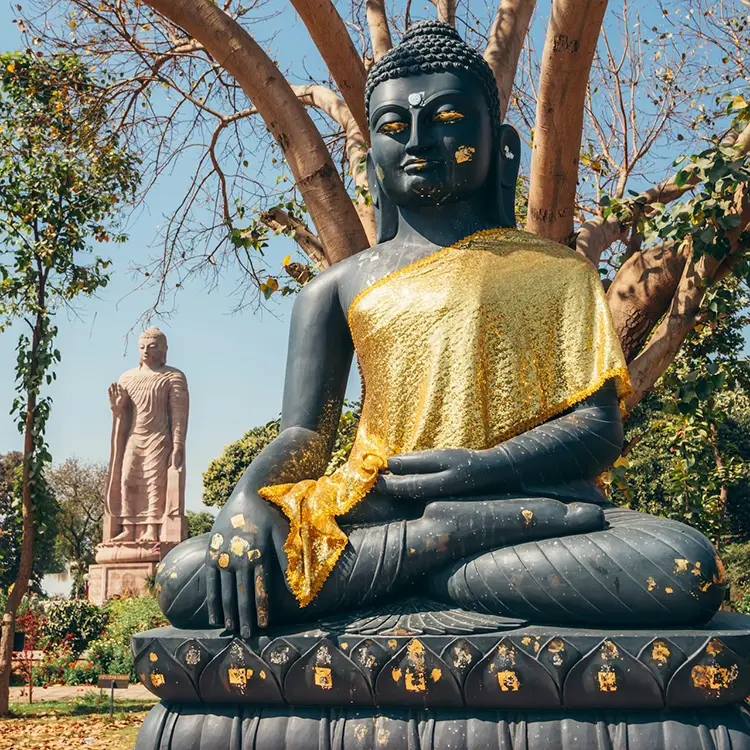
A statue of buddha

Megan Bryson in ‘The Conversation’: On Bodhi Day, Buddhists commemorate Siddhartha Gautama’s enlightenment by lighting lamps to combat darkness

December 2, 2024 by Logan Judy

Buddha statues in Sarnath, India, where he attained enlightenment. Alexander Reshnya/iStock via Getty Images Plus
Megan Bryson, University of Tennessee

Dec. 8 marks the celebration of Bodhi Day in Japanese Buddhism. Bodhi means enlightenment or awakening in Sanskrit. It commemorates the enlightenment of Siddhartha Gautama, who became the Buddha.

Buddhists throughout the world celebrate Bodhi Day, but they do not all celebrate Siddhartha’s enlightenment on Dec. 8. In China, South Korea and Vietnam, his enlightenment is observed on the eighth day of the 12th lunar month. In 2025, this falls on Jan. 7.

In the Theravada form of Buddhism followed in Southeast Asia, Gautama’s enlightenment is commemorated along with his birth and death during the Vesak festival celebrated in April or May. This is similar to Tibetan Buddhism, which also combines the observation of the Buddha’s birth, enlightenment and death in the springtime Saka Dawa festival.

As a scholar of Buddhism in East Asia, I study how people adapt Buddhism to their own cultural contexts. Bodhi Day is a good example of how Buddhists in different parts of Asia developed their own versions of important Buddhist holidays.

The story of Bodhi Day

No matter when Buddhists celebrate the Buddha’s enlightenment, the story behind the holiday is consistent. Biographies of the Buddha describe how young Prince Siddhartha became disillusioned with the fleeting luxuries of palace life.

He eventually left home to find a cure for the inevitable suffering caused by old age, sickness and death. Siddhartha sought guidance from various religious masters, including one who taught his students to practice extreme self-denial, such as eating only a spoonful of gruel per day.

Following this method, Siddhartha wasted away until he was just skin and bones, but he got no closer to resolving the problem of suffering. It was at just this time that a young woman named Sujata came by with milk porridge, which she offered to the skeletal Siddhartha.

This meal gave Siddhartha the energy he needed to resolve the problem of suffering once and for all. He realized that no external teacher could give him the answers he sought, and he would have to solve this problem on his own.

Siddhartha decided to meditate under a pipal tree, also known as a sacred fig tree, until he reached enlightenment. Over the next seven days he meditated, deepening his insights into the true nature of existence. On the seventh day, Siddhartha attained complete awakening to become a buddha. Buddhas are people who reach full enlightenment on their own, like Siddhartha, without direct guidance from a teacher.

Monks and nuns in Japanese and Korean Zen Buddhism follow this model by meditating intensively for the seven days leading up to Bodhi Day.

As a buddha, Siddhartha began sharing his insights with other spiritual seekers, attracting a group of followers who were the first Buddhists. Buddhist monks and merchants spread the religion to the north, east and south, and by the fourth century C.E. it was well established in China.

The Laba Festival and congee

Children, wearing bunny hats, seated around a table with a red table cloth, with several bowls on it.
Children eat rice porridge at a temple during the Laba Festival on Jan. 13, 2019, in Nanjing, China. Visual China Group via Getty Images

China already had its own religious and philosophical systems, along with its own calendar of holidays, when Buddhism came onto the scene. Buddhists in China adapted their religion to Chinese language and culture, including some existing holidays.

The 12th and final month of the Chinese lunar calendar was already a time for making sacrifices for ancestors in advance of the new year. In fact, the 12th month is called La, which originally referred to the cured meat that people offered to their ancestors at this time of year. “Ba” means the number eight, so Laba translates to “the eighth day of the La month” or “eighth day of the 12th month.”

Buddhism entered China in the first century C.E. By the third century, Chinese Buddhists identified the eighth day of the 12th month as the date of the Buddha’s enlightenment. Celebrating the Buddha’s enlightenment – or Bodhi Day – at the same time as the Laba Festival required adaptation.

The Laba Festival involved meat offerings and hunting, both of which violate Buddhist rules against killing animals. Over time, a compromise emerged, and rice porridge, or congee, became this holiday’s signature food for Buddhists and non-Buddhists alike. Rice has been used in Chinese religious offerings since at least the eighth century B.C.E., and rice congee also recalls the offering of milk porridge that helped Siddhartha on his journey to Buddhahood.

Light in the darkness

Another aspect of the Laba Festival, or Bodhi Day, is that it falls around the winter solstice, the darkest part of the year.

Like other holidays at this time of year, Bodhi Day involves lighting lamps to combat the darkness. For East Asian Buddhists, these lamps symbolize the Buddha’s enlightenment, which lights the path for others to follow.

Bodhi Day is celebrated in Japan and throughout the Japanese diaspora on Dec. 8 because Japan switched from the lunar to solar calendar in 1873. Buddhists in other East Asian countries, such as China, Vietnam and South Korea, will observe Bodhi Day on Jan. 7, 2025.

East Asian Buddhists will celebrate the holiday in different ways – some by lighting lamps, some by eating congee, some others by meditating for a full week straight. But for all Buddhists, Bodhi Day represents hope and the potential to overcome suffering.The Conversation

Megan Bryson, Associate Professor of Religious Studies, University of Tennessee

This article is republished from The Conversation under a Creative Commons license. Read the original article.

Filed Under: Featured

Religion Adds Dimensions to Environmental Studies

October 24, 2024 by Logan Judy

Filed Under: Featured

Megan Bryson.

Bryson is guest on The Royal Studies Podcast as a panelist

October 22, 2024 by religionweb

“In this roundtable episode, host Ellie Woodacre is joined by a panel of five experts on monarchy in premodern Asia–including the Indian subcontinent, China and Southeast Asia. This episode captures a vibrant discussion on the impact of Buddhism on the ideals and practice of monarchy in the region, drawing on their respective research.”

Filed Under: Faculty Spotlight, Featured

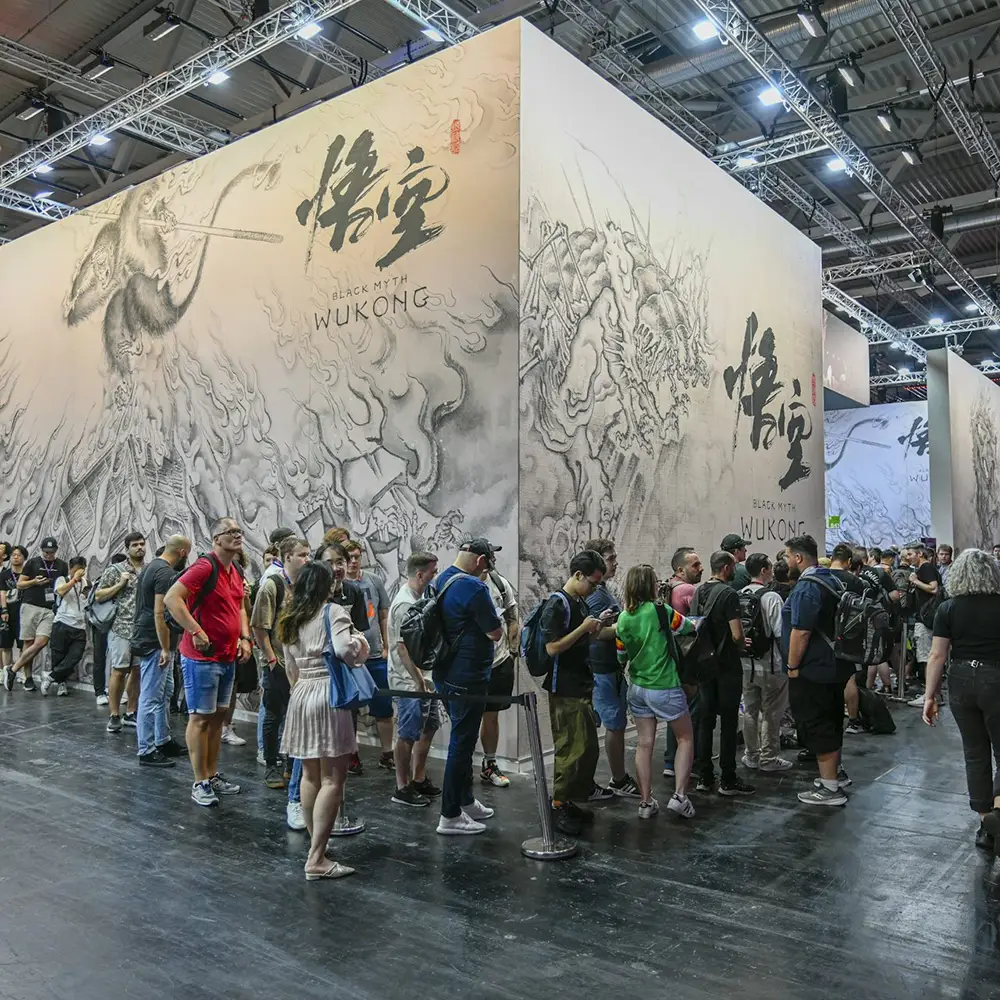
Gaming enthusiasts at the 2023 Gamescom gaming fair with Black Myth Wukong artwork behind them

Michael Naparstek in ‘The Conversation’: A video game based on the Chinese novel ‘Journey to the West’ is the most recent example of innovative retelling of this popular story

September 23, 2024 by Logan Judy

people in line at a gaming convention around advertising for the video game Black Myth Wukong
Gaming enthusiasts at the 2023 Gamescom gaming fair on Aug. 23, 2023, in Cologne, Germany. Sascha Schuermann/Getty Images
Michael Naparstek, University of Tennessee

The recent launch of the video game “Black Myth: Wukong” has broken numerous records around the world for the number of users. The game is set in the world of the famous Chinese novel “Journey to the West,” where players battle gods and demons of traditional popular Chinese religion. In the first few weeks following its release on Aug. 19, 2024, “Black Myth: Wukong” had reportedly sold over 18 million copies, making it one of the fastest-selling games of all time.

Players take on the role of freeing Sun Wukong, the monkey protagonist from the popular 16th-century novel. The story details the journey of the Chinese monk, Xuanzang, as he makes his way to India in search of Buddhist scrolls. Sun Wukong aids the monk in this trip. Yet, the monkey proves to be the ultimate troublemaker, as Sun Wukong insults popular gods of the Chinese pantheon and insists on besting them in magical battles. Sun Wukong’s fate is sealed when the Buddha imprisons him under a mountain as punishment for all the havoc he created in Heaven.

The video game picks up after the end of the story, pitting the player against those whom Sun Wukong had fought in the popular narrative. In so doing, the game continually references the complex and competitive world of traditional Chinese religion in which Buddhist, Taoist and popular gods are always interacting with one another.

As a scholar of Chinese religion, I am interested in the ways narratives of Chinese deities become popular and spread across different contexts. The popularity of “Black Myth: Wukong” is the most recent example in a centuries-old tradition of retelling this story through popular media.

A painting showing a human-looking mischievous monkey, walking on two legs, dressed in a red robe with a bag and stick on his back.
Woodblock print of the monkey king from the Chinese novel ‘Journey to the West.’ Japanese Artist Yashima Gakutei, 1827, Metropolitan Museum of Art.

Many stories, many versions

“Journey to the West” was first published in 1592, but the stories were popular long before that.

As scholar of Chinese literature Anthony Yu notes, the various tales describing Xuanzong and Sun Wukong’s adventures existed for nearly 1,000 years before they were collected and published in “Journey to the West.” People in traditional China would hear many of these adventures through oral storytelling, but also through various media such as dramatic performances, poetic tales and short stories.

Traveling opera troupes were one of the most popular ways to tell Sun Wukong’s tale. Professional actors would perform tales of Sun Wukong’s exploits through dramatic renditions coupled with acrobatic fight scenes and dazzling displays of martial arts. These entertaining performances would disseminate information about the gods to both literate and illiterate audiences all throughout China.

A painting showing people standing around a stage in a building which has tall pagodas.
An 18th-century painting of a Chinese traveling opera performance. Xu Yang, 18th c. via Wikimedia Commons

Stories of Sun Wukong’s mischievous, and often irreverent, behavior made their rounds throughout traditional Chinese society. The monkey hero’s brash attempts at subverting authority and picking fights with divine personae cemented his place as a popular cultural icon. As scholar of Chinese religions Meir Shahar notes, novels such as “Journey to the West” served as a way to define and transmit an entire pantheon of deities all across the various regions of traditional China.

In so doing, these forms of media would reflect the dynamic world of Chinese religion and, at the same time, help shape the way people would come to understand the stories of their own gods.

Impact on Chinese religions

Many of the characters who appear in “Journey to the West” come directly out of the Chinese pantheon. Guanyin, the Buddhist deity of compassion and one of the most popular gods across East Asia, has her struggles against Sun Wukong; Taoist figures, such as the deified Lao-tzu, the purported author of the Taoist classic “Tao Te Ching,” battles with the monkey, and ancient Chinese deities like the Queen Mother to the West and the Jade Emperor play a prominent role as authority figures throughout the story.

Sun Wukong also battles localized gods like the martial deity Erlang. Many of these figures are also referenced throughout the video game, while some, like Erlang, appear as “bosses” who need to be defeated before moving on to the next level.

In the novel, the gods work together to stand in the way of Sun Wukong, representing the authority of the Chinese pantheon. At the same time, Sun Wukong often gets the better of the gods, either through trickery or martial prowess. Eventually, the authority of the gods wins out, with the monkey trapped under the mountain. Yet, this is not the end of Sun Wukong. As the recent release of the video game demonstrates, it is but one more beginning to the monkey’s story.

While the game is careful not to promote any one religious identity, the cultural source for these compelling characters remains deeply rooted in the long history of Chinese religions.

Today’s gamers get to encounter aspects of Chinese culture in a whole new way. Players who may be unfamiliar with Sun Wukong’s character from the novel can still see Sun Wukong flip in the air, brandish his weapons and defeat his enemies with dramatic flair. Only now the gamer gets to perform these feats through their connection with the video game’s hero.

Still, while the gaming experience may be relatively new, enjoying tales of the gods is very old.The Conversation

Michael Naparstek, Lecturer in Religious Studies, University of Tennessee

This article is republished from The Conversation under a Creative Commons license. Read the original article.

Filed Under: Faculty Spotlight, Featured

The Reverend Larry Sykes Jr. (’09) speaks at the Department of Religious Studies spring 2024 Graduation and Awards Ceremony, where he received the Charles H. Reynolds Distinguished Alumnus Award.

Rev. Larry Sykes Jr. Named Religious Studies Distinguished Alumnus

September 18, 2024 by Logan Judy

Filed Under: Featured

University of Tennessee Chancellor Donde Plowman presents the Commission for Disability Undergraduate Student Award to Evan Shannon for furthering recognition of and support for disabled people at UT.

Dual Major in Classics, Religious Studies Creates Multifaceted Education

September 18, 2024 by Logan Judy

Filed Under: Featured

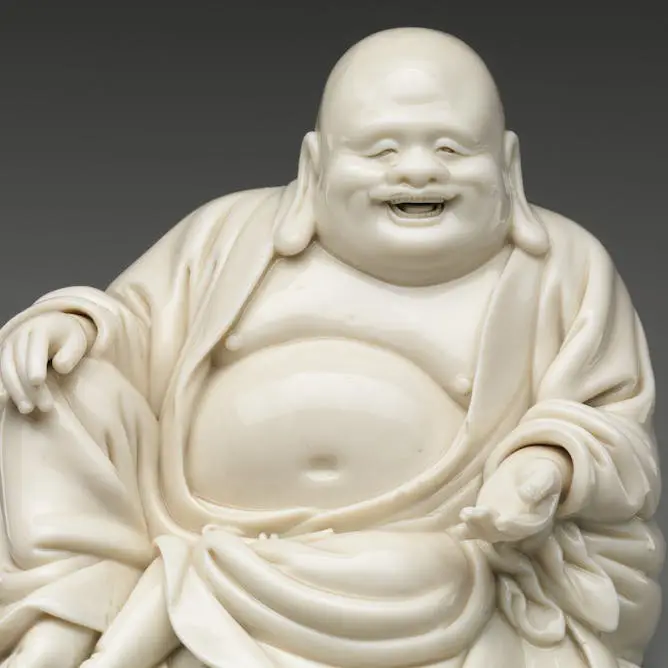
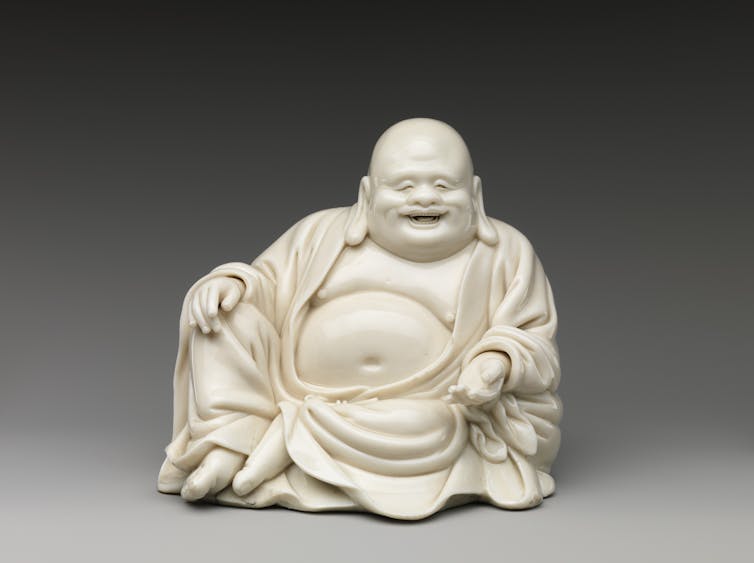
Porcelain ‘Laughing Buddha’ image, China, 17th-18th century. Metropolitan Museum of Art

Megan Bryson in ‘The Conversation’: Who is the ‘Laughing Buddha’? A scholar of East Asian Buddhism explains

August 19, 2024 by Logan Judy

a porcelain laughing Buddha
Porcelain ‘Laughing Buddha’ image, China, 17th-18th century. Metropolitan Museum of Art
Megan Bryson, University of Tennessee

With his delighted expression, round belly, bald head and monastic robes, the “Laughing Buddha” is instantly identifiable. However, astute observers might wonder why this buddha does not look like the historical Buddha, who lived in India about 2,500 years ago.

Statue of a man, with a halo around his head, wearing a robe with multiple folds.
A third-century standing Buddha statue, from ancient Gandhara, in Pakistan. Metropolitan Museum of Art

Images of the historical Buddha, known as Siddhartha Gautama or Shakyamuni, depict him with a neutral expression, slim build, tightly coiled hair and monastic robes. If the Laughing Buddha isn’t the historical Buddha, who is he, and how did he become so popular?

As a scholar of East Asian Buddhism who studies how and why deities transform over time, I see the Laughing Buddha as a key figure that shows how people have adapted Buddhism to different cultural and historical contexts.

The Zen monk who became the Laughing Buddha

One of the names for the Laughing Buddha is “Cloth Bag,” which is pronounced “Budai” in Chinese and “Hotei” in Japanese. Cloth Bag was the nickname of a Chinese Buddhist monk who lived in the 10th century. He belonged to the Zen school of Buddhism, which is known for its stories about monks who reject conventional pursuits like wealth and fame.

Cloth Bag got his nickname because he wandered from town to town carrying a cloth bag full of treasures that he shared freely with children.

Chinese Buddhists, seeing Cloth Bag’s legendary generosity, compassion and joy, concluded that he must not be an ordinary monk, but that he must be a human incarnation of the future Buddha, whose name is Maitreya. Artists in China depicted Cloth Bag as a plump, laughing monk often surrounded by children or animals. In a traditional East Asian context, his round belly represents his generosity and abundance, and also symbolizes the positive qualities of wealth and fertility.

From China, images of Cloth Bag as the Laughing Buddha traveled in two directions. They spread first in East Asia to countries such as Vietnam, Korea and Japan. Zen is a popular form of Buddhism in all of these countries, but it was Japanese Zen Buddhism that attained global popularity in the 19th and 20th centuries. This means that many images of the Laughing Buddha in the West are based on Japanese models.

Displaying Chinese porcelain

Images of the Laughing Buddha also spread west from China to Europe, where 18th-century elites showed their aesthetic sophistication by displaying Chinese-style porcelain, including statues of the Laughing Buddha.

The Laughing Buddha’s transformation into a global icon results from both the fascination with Chinese porcelain in 18th-century Europe and the 20th-century spread of Japanese Zen Buddhism.

Today we see the Laughing Buddha in stores, homes and even as a brand name. A lot of people may know what the Laughing Buddha looks like, but few may be familiar with who he is or how he became so popular.The Conversation

Megan Bryson, Associate Professor of Religious Studies, University of Tennessee

This article is republished from The Conversation under a Creative Commons license. Read the original article.

Filed Under: Faculty Spotlight, Featured

Headshot photo of Stephen Hay

Interdisciplinary Interpretations

May 9, 2024 by Logan Judy

Headshot photo of Stephen Hay

by Randall Brown

Stephen Hay, from Greeneville, Tennessee, built a standout Vol experience double majoring in English and religious studies and minoring in the Women, Gender, and Sexuality Program. He has maintained a steady pace with this mix of studies, delivering substantial scholarship to close out his senior year.

“I am currently working on my honor’s thesis,” said Hay. “Outside of that I wrote a paper titled ‘Zhenwu and the Perfection of Daoist Masculinity in the Beiyou Ji,’ which I presented at the American Academy of Religion Southeastern Conference.”

Dawn Coleman and Anthony Welch, associate professors in the Department of English, praise Hay’s academic energy and his ability to make connections across various areas of study.

“Stephen is an outstanding student who brings a wonderful energy to the classroom,” said Coleman. “He’s a serious reader, writer, and thinker who offers insightful literary interpretations and responds thoughtfully to others. He deserves major kudos for presenting original work at an American Academy of Religion conference as an undergraduate.”

Welch enjoyed Hay’s contributions to his Shakespeare classes.

“When I asked my students to interpret a difficult speech, Stephen had an uncanny ability to grasp exactly what I wanted them to see in Shakespeare’s language,” said Welch. “His analysis of the plays in class was highly sophisticated and imaginative.”

Welch appreciated Hay’s nuanced and precise readings and the unexpected connections he made while examining Shakespeare’s work—translating the stories through the lenses of his dual major and minor.

“He took a special interest in questions of gender and power, but his approaches to the plays were diverse, nimble, and original,” said Welch. “Stephen is one of those rare students who combines a strong work ethic, a sophisticated critical imagination, excellent writing skills, and an ability to show intellectual leadership in the classroom.”

Following graduation, Hay will take some time off from academic endeavors to travel the world and learn a new language

“I plan to take a gap year and live in Taiwan,” he said. “While there I plan to learn Mandarin in preparation for applying to grad school in religious studies.”

He encourages future Vols to bring their own unique perspectives and immerse themselves in the varied possibilities for discovery at Rocky Top.

“The University of Tennessee is a special place where you matter and make a difference,” said Hay. “Don’t be afraid to be yourself here because the university thrives in diversity of experience, character, and thought. As such, use this chance to explore—take new classes and subjects, join campus organizations, and make UT your home.”

The College of Arts and Sciences congratulates Hay on his academic success as he sets out to share his Vol experience around the world.

Filed Under: Featured

Ramsey Recognized as a 2024 Torchbearer

May 1, 2024 by religionweb

Filed Under: Featured

  • « Previous Page
  • 1
  • 2
  • 3
  • Next Page »

Recent Posts

  • Bryson Awarded Lindsay Young Professorship
  • From ancient texts to modern practices, Daoism provides a profound framework for understanding the world not as broken but as naturally seeking balance
  • Aba Receives Fellowship for Global Leaders
  • At the Intersection of Religion and Philosophy
  • Religion, Crime, and Punishment

Recent Comments

No comments to show.

College of Arts & Sciences

117 Natalie L. Haslam Music Center
1741 Volunteer Blvd.
Knoxville TN 37996-2600

Phone: 865-974-3241

Archives

  • July 2026
  • May 2026
  • March 2026
  • February 2026
  • October 2025
  • August 2025
  • July 2025
  • June 2025
  • May 2025
  • February 2025
  • December 2024
  • October 2024
  • September 2024
  • August 2024
  • May 2024
  • January 2024
  • December 2023
  • November 2023
  • October 2023
  • May 2023
  • April 2023

Categories

  • Faculty Spotlight
  • Featured
  • newsletters

Copyright © 2026 · University of Tennessee, Knoxville WDS Genesis Child on Genesis Framework · WordPress · Log in

Department of Religious Studies

College of Arts and Sciences

501 McClung Tower
Knoxville TN 37996-0450

Email: religiousstudies@utk.edu

Phone: 865-974-2466

Facebook Icon X Icon Instagram Icon  YouTube Icon

The University of Tennessee, Knoxville
Knoxville, Tennessee 37996
865-974-1000

The flagship campus of the University of Tennessee System and partner in the Tennessee Transfer Pathway.

ADA Privacy Safety Title IX