

The Conversation: What Taoism teaches about the body and being healthy
What Taoism teaches about the body and being healthy
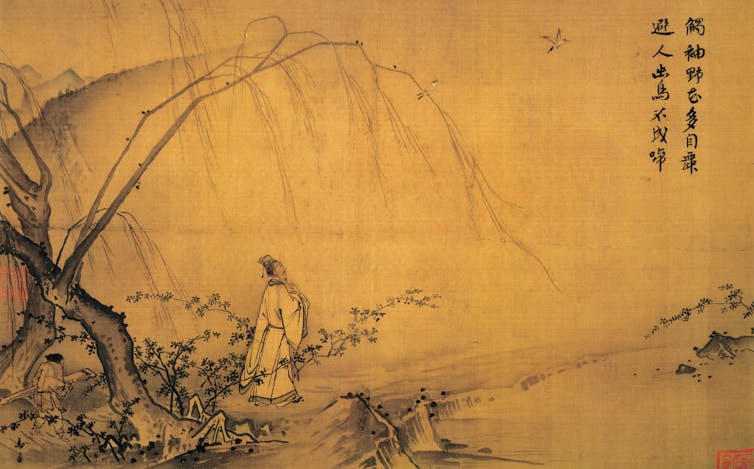
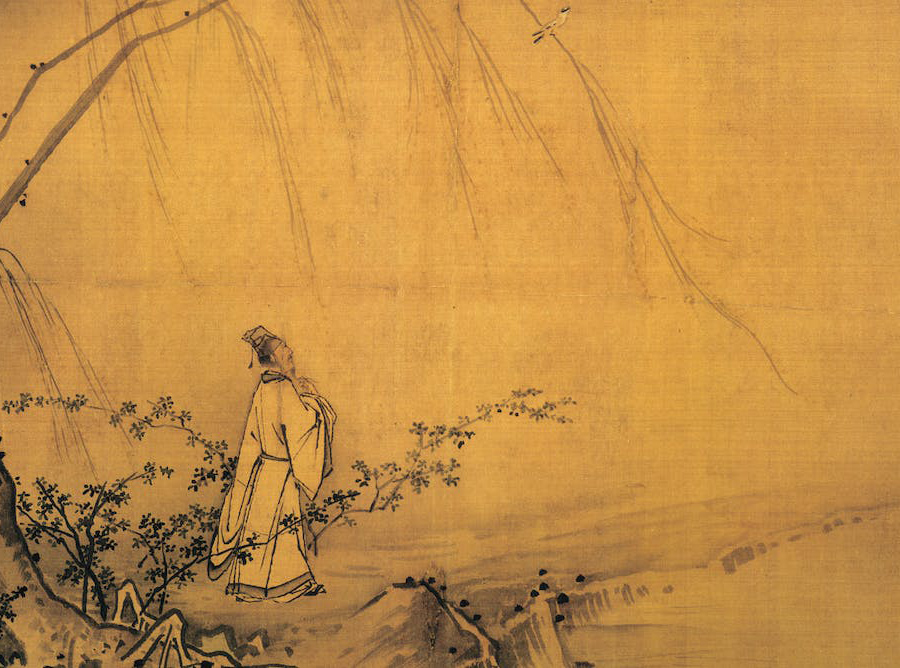
#/media/File:Ma_Yuan_Walking_on_Path_in_Spring.jpg)
New Year’s resolutions often come with a renewed investment in making our bodies healthier. Many may take to the newest diet plan or sign up for a health club membership, but it is worth taking some time to consider what actually constitutes a healthy, happy body.
Taoist visions of the body form a central part of my research. Taoism, (also spelled Daoism) an indigenous tradition of China, understands humans to be an integral part of the larger cosmos.
Rituals and bodily techniques are used to align one’s individual body with surrounding social and natural environments. These concepts of the body can inform individuals on their relationship with our environment and on what it means to be healthy.
Taoism, the body and cosmos
Accounts of Taoism begin sometime in the fourth century B.C.E., starting with the text “Tao Te Ching,” attributed to Lao Tzu. Though scholars do not believe there was an actual person called Lao Tzu, this figure, whose name means “old master” or “old child,” would become the model for bodily practice. Taoists would later develop rituals designed to mirror their body with that of Lao Tzu’s as a way to align themselves with the Tao, or the source of all things.
Taoist texts described Lao Tzu’s body as a kind of map for the entire cosmos, visualizing their own individual body like a smaller version of the entire cosmos, and likening the entire cosmos to a larger mirror of one’s own body. Bringing one’s body in alignment with the cosmos was understood to grant Taoists the ability to transform the environment around them by transforming their own bodies.
What happened in the body was understood to have an effect on the entire universe, just as the environment has an effect on one’s body.
Physical exercises for longevity
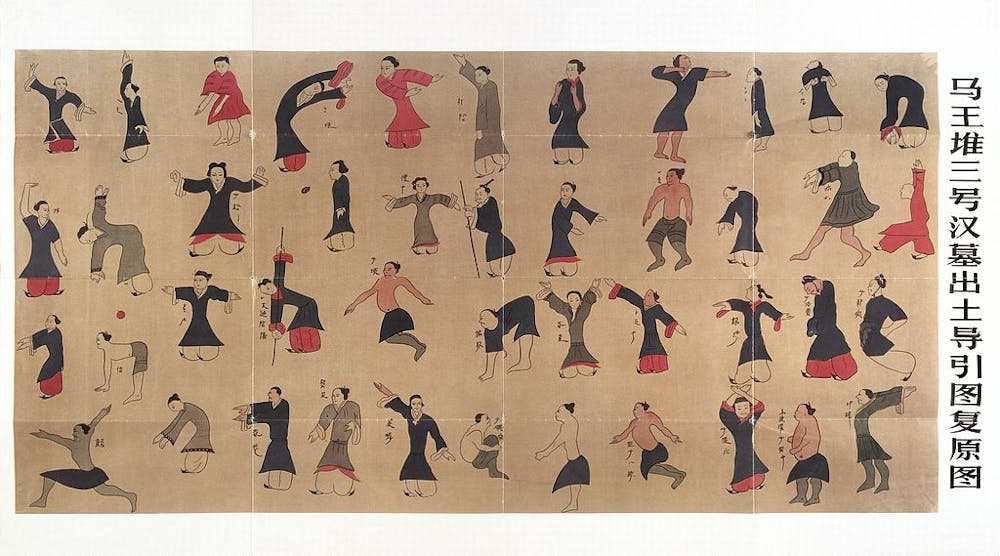
Some of the earliest examples of Taoist practices describe a series of body movements and postures to help align one’s body with their environment.
Historian of Taoism, Isabelle Robinet, notes that dating back to the second century B.C.E., the physical exercises were used to help cultivate one’s qi, or breath, in order to better achieve harmony with the patterns of nature, nourish one’s health and increase longevity. Contemporary practices such as qigong continue to be informed by these concepts to this day.
In addition to practicing bodily techniques, early Taoists also sought out a connection to the environment through alchemy, a process of mixing rare natural elements together to create a refined substance that they believed was an elixir of health. According to renowned scholar of Taoist alchemy Fabrizio Pregadio, practitioners sought out rare and powerful elements from the earth, which they mixed and consumed in an attempt to attain longevity or even immortality.
Integrating with the outer landscape
By the eighth century C.E., Taoists would look inward for these alchemical benefits. Taoist masters developed meditative and bodily practices called “neidan,” or inner alchemy, to help replicate the landscape within their own body.
Rather than seeking out rare elements in the earth, inner alchemy taught how to find the power to refine one’s vital essences from within one’s own body.
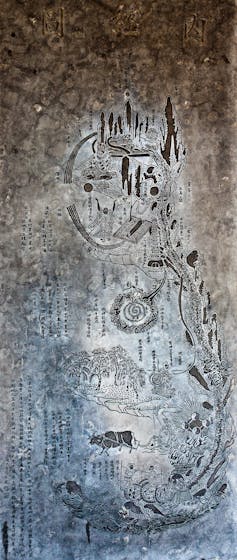

Fully developed ritual programs instructed Taoists to undertake an inner journey within themselves. Along the way, they would visualize their old self encountering temples tucked away within lush mountain forests, discover hidden grottoes, and even find divine figures mixing elixirs of immortality.
This internal climb was believed to eventually lead one’s old self to the peak located at the crown of one’s head. From there, Taoists would visualize a new immortal self emerging out from atop their skull.
Taoist priests and community
This concept of a body fully integrated with the cosmos informs the logic for how contemporary Taoist priests conduct rituals to benefit the broader community today.
According to Kristofer Schipper, a scholar of Taoist ritual, the body is seen as the primary medium that can fulfill their duty to reconnect the local community with the original source of the cosmos – the Dao itself.
Taoist priests will envision a different kind of journey, this time across the cosmos but still all within their own body. They seek an audience with the highest gods of Taoism, known as the Three Pure Ones, to whom they will report the merits of the local community.
It is understood that in so doing, the Taoist priest helps reaffirm the connection between the people and the Tao itself. Thus, the community becomes integrated into the “Taoist Body.”
While an audience with the purest forms of the Tao is reserved only for trained Taoist priests, notions of the Taoist body ultimately provide a way for everyone to understand one’s body to be transformed both inside and out.
As the new year brings new resolutions for healthier bodies, we may gain from added perspectives on what transforming our body can mean – not just for ourselves, but for those around us.
Michael Naparstek, Lecturer in Religious Studies, University of Tennessee
This article is republished from The Conversation under a Creative Commons license. Read the original article.
Megan Bryson Published in ‘The Conversation’
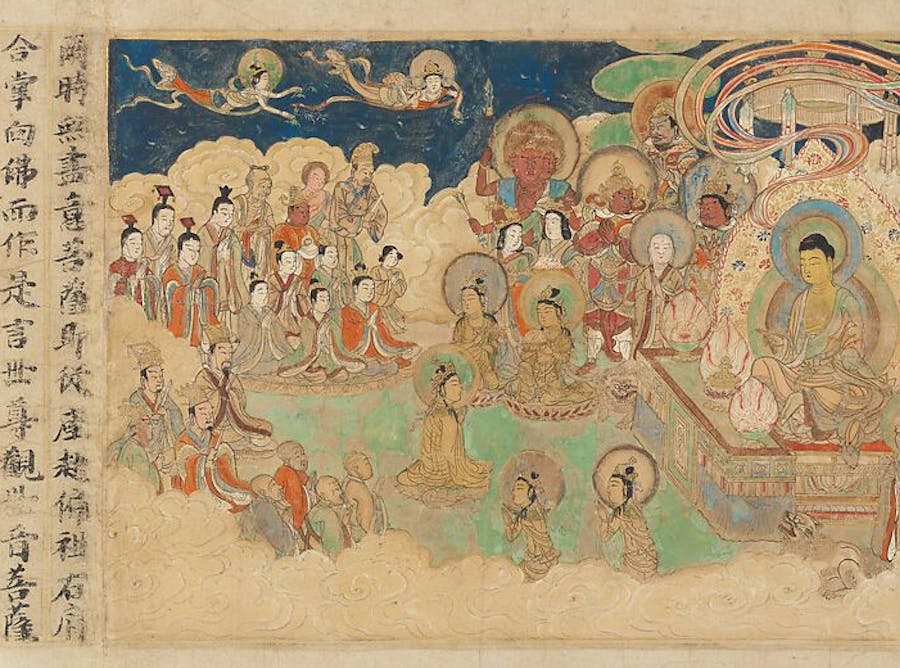
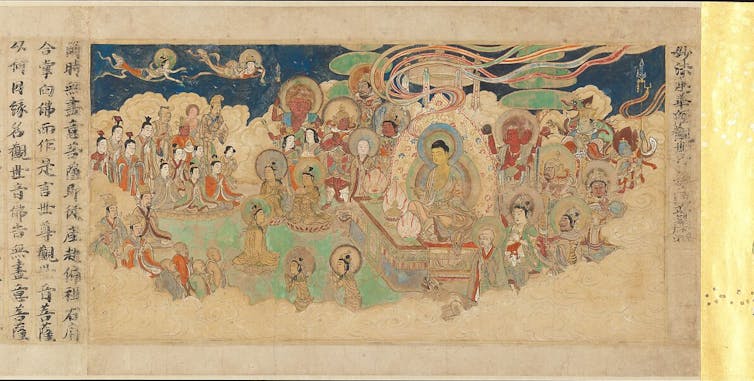
The Lotus Sutra − an ancient Buddhist scripture from the 3rd century − continues to have relevance today
State legislatures across the United States have introduced over 400 bills to limit transgender Americans’ rights. Many of these bills’ sponsors, such as the Christian nonprofit Alliance Defending Freedom, cite Christian values as well as the values of the other Abrahamic faiths – Judaism and Islam – to justify their anti-trans positions.
The Alliance Defending Freedom claims that Christians, Jews and Muslims view gender as binary and defined only by biology, though these religions’ diverse followers actually hold a range of views on LGBTQ+ issues. Historically, these religions were often more accepting of varied gender identities before colonialism imposed binary gender as a universal concept.
Religious values from multiple traditions have supported transgender identity. As a scholar of Buddhism and gender, I know that several Buddhist texts treat gender as fluid. One such text is the Lotus Sutra, one of the most popular Buddhist scriptures in East Asia. Its core message is that everyone, no matter their gender or status, has the potential to become a Buddha.
The Lotus Sutra conveys its message of universal Buddhahood in several stories that depict transformations between male and female bodies. For example, a dragon girl instantly transforms into the masculine body of a Buddha, proving that female bodies are not barriers to awakening.
Elsewhere, the Lotus Sutra describes how the bodhisattva Avalokiteshvara, known as Guanyin in Mandarin and Kannon in Japanese, takes on male or female forms depending on the needs of the audience.
The dragon girl’s gender transformation
To understand the story of the dragon girl, it is important to understand how Buddhas’ bodies were defined as masculine in early Buddhism. Most people are familiar with the historical figure Siddhartha Gautama as “the Buddha,” but Buddhists believe that several “Buddhas,” or enlightened teachers, have been born throughout history. All of these Buddhas are said to possess 32 marks that distinguished their bodies from regular bodies.
One of these marks was a sheathed penis, which meant that Buddha bodies were male by definition. In addition, Buddhist texts identified five roles, including Buddha, that were off-limits to women.
In the Lotus Sutra, the Buddha’s disciple, Shariputra, refers to these limitations when he rejects the idea that the dragon girl could quickly attain Buddhahood:
“You suppose that in this short time you have been able to attain the unsurpassed way. But this is difficult to believe. Why? Because the female body is soiled and defiled, not a vessel for the Law. How could you attain the unsurpassed bodhi? … Moreover, a woman is subject to the five obstacles. First, she cannot become a Brahma heavenly king. Second, she cannot become the king Shakra. Third, she cannot become a Mara demon king. Fourth, she cannot become a wheel-turning sage king. Fifth, she cannot become a Buddha. How then could your female body attain Buddhahood so quickly?”
However, the dragon girl proves Shariputra wrong by instantly attaining Buddhahood, transforming her young, female, nonhuman body into the male body of a Buddha. Women in premodern East Asia found inspiration in the dragon girl’s story because it showed that their own female bodies were not barriers to enlightenment.
The bodhisattva’s gender fluidity
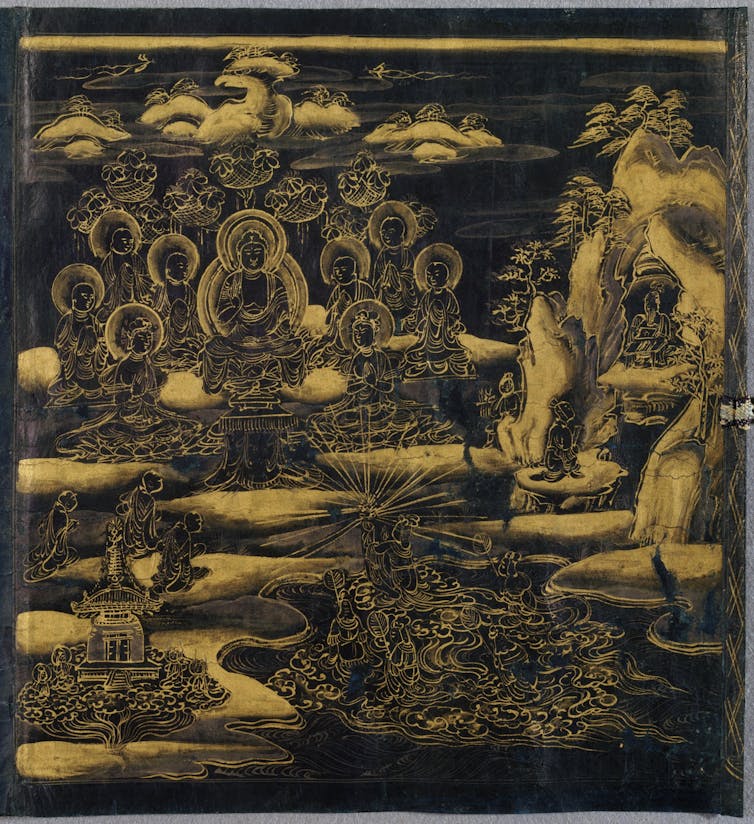
Another inspiration from the Lotus Sutra can be found in the Chapter of Universal Salvation, which focuses on the bodhisattva of compassion, Avalokiteshvara. A bodhisattva is an advanced spiritual being who postpones enlightenment to help people in the world.
According to this chapter, Avalokiteshvara will adopt any form to save people. Avalokiteshvara can become a monk, nun, layman, laywoman, rich man, rich man’s wife, young boy, young girl, human or nonhuman, depending on the audience’s needs.
In China, this passage provided scriptural support for Avalokiteshvara’s perceived transformation from a male to female figure. Indian Buddhist texts described Avalokiteshvara as male, but in China people came to see Avalokiteshvara as female.
Though scholars have not found one single explanation for this transformation, the Lotus Sutra passage offers justification for Avalokiteshvara’s gender fluidity. Images of Avalokiteshvara from China, Japan and Korea can depict the bodhisattva as masculine, feminine or androgynous.
The Lotus Sutra and transgender inspiration
Due to the Lotus Sutra, Avalokiteshvara has become an inspiration and icon for transgender, gender-fluid and nonbinary people in and beyond East Asia. At Japan’s Shozenji Temple, head nun Soshuku Shibatani, who underwent gender reassignment surgery, has said, “The Kannon Bodhisattva has no gender identity,” using Avalokiteshvara’s Japanese name.
A blog post from Taiwan quotes from the Lotus Sutra in describing Avalokiteshvara as a nonbinary figure who transcends any single gender identity.
However, Avalokiteshvara’s role as a transgender icon is not universally accepted. Another Taiwanese blogger reported that a friend of theirs argued with their description of the bodhisattva as transgender. In April 2022, an Avalokiteshvara statue in The Burrell Collection in Glasgow, Scotland, labeled as a transgender icon, resulted in protests. The anti-trans group For Women Scotland argued that the label unnecessarily politicized the statue.
Despite these objections, more and more people have found inspiration in Avalokiteshvara as a transgender, nonbinary or gender-fluid figure. Just as the Lotus Sutra’s story of the dragon girl inspired Buddhist women in premodern East Asia, Avalokiteshvara’s gender fluidity offers inspiration to people today.
MJ Posani, an undergraduate student at the University of Tennessee, contributed to the research for this article.
Megan Bryson, Associate Professor of Religious Studies, University of Tennessee
This article is republished from The Conversation under a Creative Commons license. Read the original article.
Michael Naparstek Published in ‘The Conversation’
How sacred images in many Asian cultures incorporate divine presence and make them come ‘alive’
Michael Naparstek, University of Tennessee
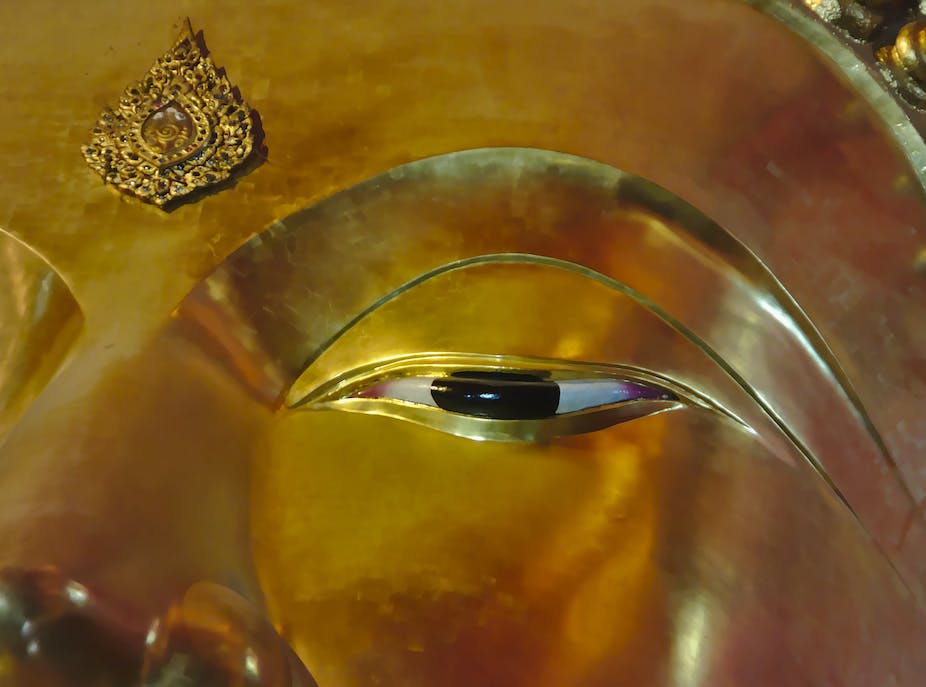
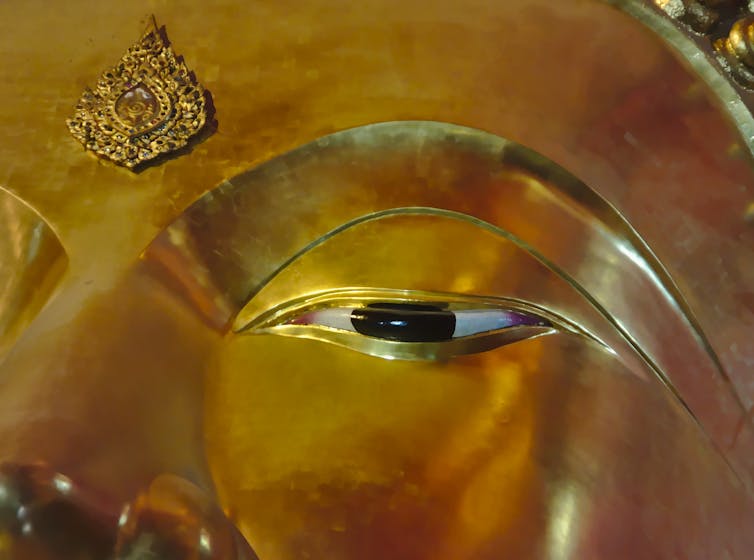
Walking into a favorite restaurant here in Knoxville, Tennessee, I was immediately greeted by a golden statue of Buddha, its sparkling gemstone eyes meeting my own as I made my way through the door. The aromas of Thai curries beckoned, but as I was led to a table, I kept thinking about those glinting eyes.
Sacred objects are everywhere: Statues and paintings of gods fill museum galleries and catalog pages alike. You might also see them gracing a neighbor’s yard or upon an altar in your friend’s home.
Some dazzle in bejeweled splendor. Others may appear more humble, their luster softened through generations of hands passing them down. Oftentimes, it can feel as though sacred images are looking back.
I research the ways in which objects express the power of divine presence in Asian religious contexts. Studying different perspectives on sacred objects helps us think beyond religious contexts and allows us to rethink how objects and images play an active role in our lives.
Sacred visual culture
Hindu practice is defined by “darśan” – a ritual act of interacting with the divine through the visual experience. Scholar Diana Eck describes this interaction in her seminal study of Indian visual culture, “Darśan,” in the following way: “to stand in the presence of the deity and to behold the image with one’s own eyes, to see and be seen by the deity.”
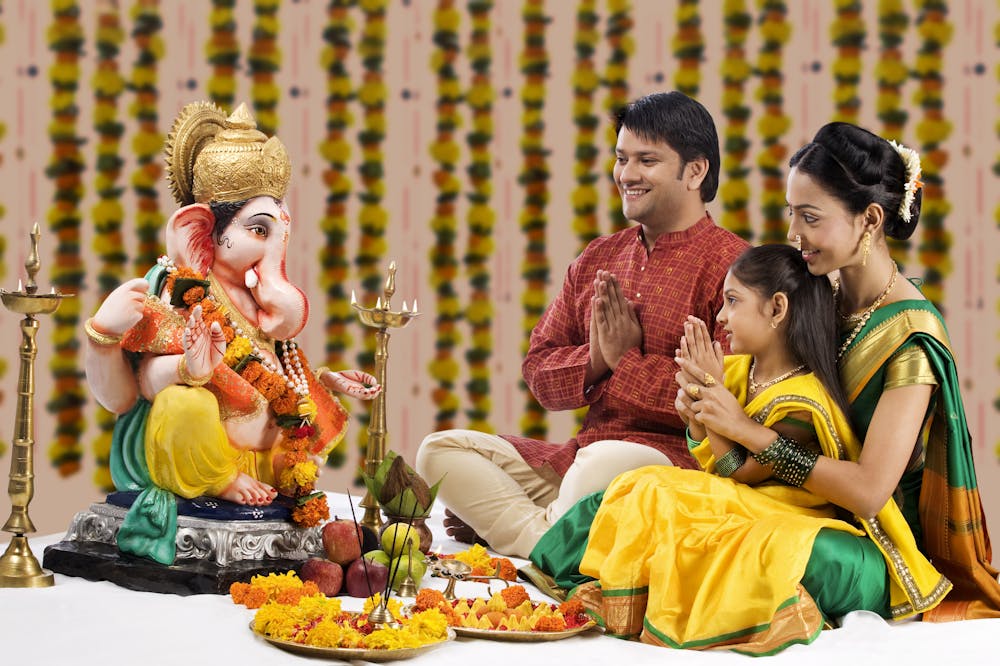
Theravada Buddhist rituals in Southeast Asia include all-night chanting sessions to recharge statues’ power. As scholar of Theravada Buddhism Donald Swearer notes in “Becoming the Buddha,” monastics and laypeople in northern Thailand will gather to recite Buddhist sutras while holding cords attached to an image of the Buddha, forming an intricate web of connection between the image and the Buddhist community.
The benefits gained from these chants is understood to enter the statue, recharging its karmic power and reanimating it to once again interact with the community.
Japanese Buddhist statues contain multiple items ritually placed within their wooden cavities: bones of saints, robes from eminent monastics and even silk-fashioned replicas of visceral organs like lungs and kidneys. As art historian James Dobbins notes, certain Buddhist rituals are performed in order to transform the body of a statue into a living body.
In cases like this, inanimate objects are believed to transform into not only sacred things, but also active, living beings who can see, hear, taste and respond to the concerns of those who worship them.
‘Eye-opening’ ritual
There are many different ways to enliven an image, and each ritual tradition carries its own unique process. However, the most well-known across Asia is commonly referred to as the “eye-opening” ceremony. The term “eye-opening” gets its name from the culmination of an intense ritual process wherein the monk paints in the pupils of the image, thus opening its eye to see.
In Sri Lanka, Buddhist monks perform a version known as the netra-pinkama, which loosely translates to “meritorious action of the eyes.”
Richard Gombrich, a scholar of Buddhism and Sanskrit, noted in his study of Buddhism in Sri Lanka that “Before consecration, a statue is treated with no more respect than one would give the materials of which it is composed. … The very act of consecration indicates that a statue is being brought to life.”
Enlivening an image is not a task undertaken lightly, as it is believed in some cases that any demonic spirits loitering around could interrupt the process, thereby resulting in an ineffective ritual or even a malevolent icon. Both the temple grounds and the ritual specialists must undergo purification rites before beginning. The whole process is filled with strict procedures and avoidance of taboos – a common theme among consecration rituals across Asian religious traditions.
Perhaps most importantly, the monk must refrain from looking directly into the icon’s eyes, and thus uses a mirror to look over their shoulder in order to paint in the icon’s pupils.
In Taiwan, statues and paintings of Buddhist, Daoist and local gods will undergo a similar kind of practice known as “kaiguang,” meaning “opening the radiance.” Monks, Daoist masters and even the artists who carve the statues may perform the rite on behalf of the individuals or temple communities that commission the image.
Once completed, shops will wrap a piece of red paper around to cover the statue’s eyes to ensure that the first thing that the image sees is the face of the one who requested it. The power of sacred vision is such that it must literally be kept under wraps.
Living images
Once its eyes have been opened, the image becomes a living thing capable of performing powerful deeds. As such, people may behave much differently – making offerings of incense and taking pains to follow social etiquette lest they offend. The care with which these objects are treated once they have been “activated” suggests that there is a lot more here than meets the eye.
As Eck’s observation attests, being seen is critical to understanding what images do. By seemingly looking back at us, sacred images remind us that we are not alone in this world. In so doing, they also send a message that the world is not there for our eyes only, but that other viewpoints are just as powerful as our own.
Michael Naparstek, Lecturer in Religious Studies, University of Tennessee
This article is republished from The Conversation under a Creative Commons license. Read the original article.
Megan Bryson Published in The Conversation
Happy birthday, Buddha! Why the founder of Buddhism has so many different birthdays around the world
Megan Bryson, University of Tennessee
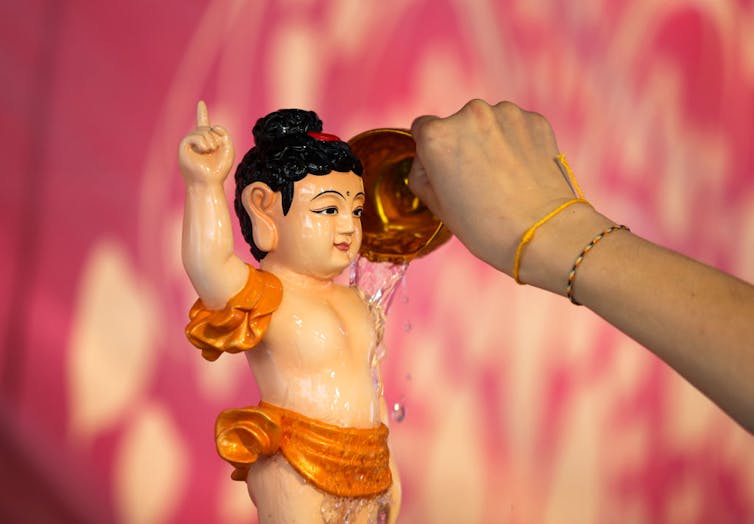
When Siddhartha Gautama was born, he was clearly no ordinary infant. According to Buddhist texts, he raised his hand to the skies and declared, “In the heavens above and below the heavens, I am the world’s most honored one. I will free all beings from birth, old age, sickness, and death.”
Then the remarkable baby is believed to have received a first bath: streams of water poured by the gods Brahma and Indra – or flowing from two dragon kings’ mouths, depending on the legend. This cleansing consecrated the Buddha-to-be as holy, signaling that even the gods recognized him as worthy of veneration.
Buddhists believe that several “buddhas,” or enlightened teachers, have been born throughout history. Yet the title “the Buddha” typically refers to this historical figure, Siddhartha Gautama, who went on to found Buddhism. Each year on the Buddha’s birthday, East Asian Buddhists recreate his first bath by pouring water or sweetened tea over a statue of the infant.
The holiday has been observed in different parts of Asia for hundreds of years, but its significance varied by region. In Sri Lanka, for example, it was a religious day simply celebrated at temples, not a public celebration. In Korea, on the other hand, the Buddha’s birthday became a more commercial festival under the Choson dynasty, which frowned upon Buddhist religious practices and ended in 1910.
Buddhist reformers in the 19th and 20th centuries, however, deliberately emphasized the Buddha’s birthday in their efforts to unite Buddhist populations across countries and protect traditions from Christian missionaries. In the late 1800s, Sri Lankans successfully petitioned the British colonial government to allow celebrations for the Buddha’s birthday, which they deliberately modeled on Christmas – a model that caught on around Asia.
These efforts helped the Buddha’s birthday become a major global holiday, but celebrations still take place on different dates and with different traditions. As a scholar of Buddhism who studies the religion’s transmission from India to China, I am keenly aware of how people adapt practices and ideas to their own cultures.
One Buddha, many dates
In South Asia and Southeast Asia, the Buddha’s birthday is celebrated on the full moon of the second lunar month, known as Vesākha or Vaiśākha. In Sanskrit, a full moon is “Pūrṇimā,” which is why the holiday is often called Buddha Pūrṇimā, Vesak or Wesak.
Vaiśākha corresponds to April and May of the Gregorian calendar, so in 2023, people in countries like Sri Lanka, Cambodia, Laos and Burma celebrated the Buddha’s birthday on the full moon of May 5.

Buddhists in East Asia, however, mark the Buddha’s birthday on the eighth day of the fourth lunar month – and follow a different lunisolar calendar, too. In China, Vietnam and Korea, Buddha’s birthday will be celebrated in 2023 on May 26.
But there are even more variations. The Taiwanese government decided in 1999 to celebrate the Buddha’s birthday jointly with Mother’s Day, on the second Sunday in May. In Japan, meanwhile, the Buddha’s birthday is called “Flower Festival” – Hana Matsuri in Japanese – and celebrated on April 8, following the government’s decision to adopt the Gregorian calendar in 1873.
Yet another date for the Buddha’s birthday in 2023 is June 4: the full moon of the fourth lunar month in the Tibetan lunisolar calendar. The entire month, called Saga Dawa, is considered holy because it includes the Buddha’s birth, awakening and death. Tibetan Buddhists believe that good deeds generate exponentially more positive karma during Saga Dawa than at other times of the year.
The date of the Buddha’s birthday isn’t the only difference between cultures. In South Asia and Southeast Asia, including Tibetan regions, Vesak doesn’t just commemorate the Buddha’s birth, but also his attainment of nirvāṇa, or enlightenment, and his death, known as parinirvana. In East Asia, however, the Buddha’s enlightenment and passing are honored on separate days, so the spring holiday only focuses on the Buddha’s birth.
China: Care for creatures
Throughout East Asia, Buddhists will bathe statues of the infant Buddha-to-be, recite Buddhist scriptures and make donations to Buddhist temples – but there will still be a lot of diversity in these celebrations.
In China, the practice of “fangsheng,” releasing animals, has been part of celebrating the Buddha’s birthday since the 11th century. Devout Buddhists purchase animals otherwise destined for slaughter and release them into the wild. Recently, some cities in China have encouraged greater consideration of local ecosystems to prevent invasive species that worshippers release from crowding out native animals.
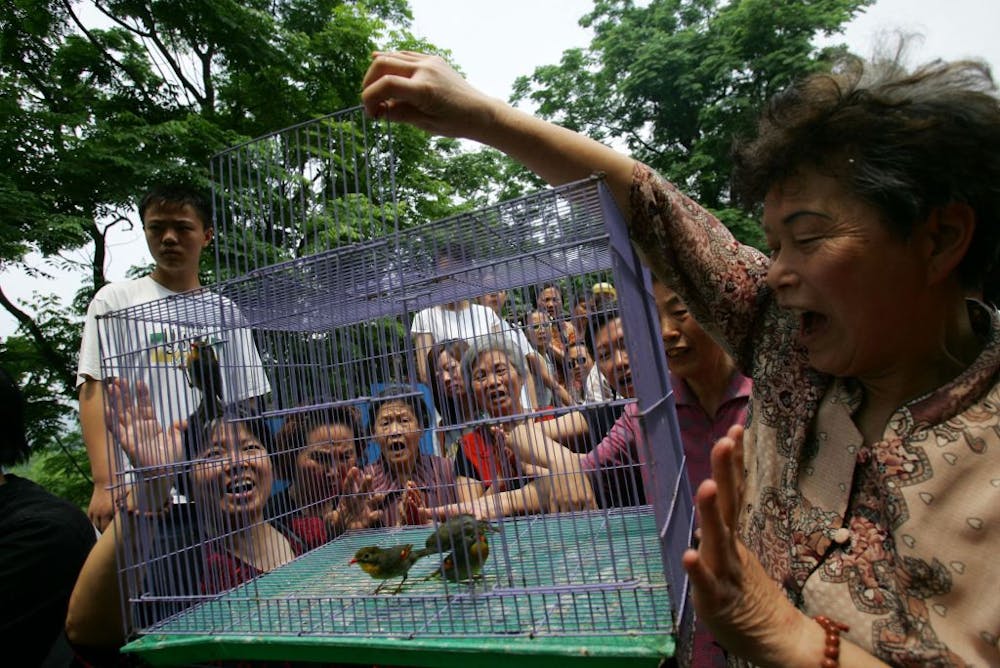
Another way Chinese Buddhists express compassion for all living beings is by avoiding meat for three days around the Buddha’s birthday – similar to the Tibetan practice of following a vegetarian diet during the month of Saga Dawa.
Korea: Lighting up the sky
Korea was under Japanese imperial rule from 1910 to 1945. During that period, the Japanese government sponsored a joint Japanese-Korean celebration of the Buddha’s birthday that revived the holiday’s religious significance. Though many Koreans opposed the Japanese occupation, some Korean Buddhists appreciated the opportunity to celebrate the Buddha’s birthday as a new pan-Buddhist holiday.
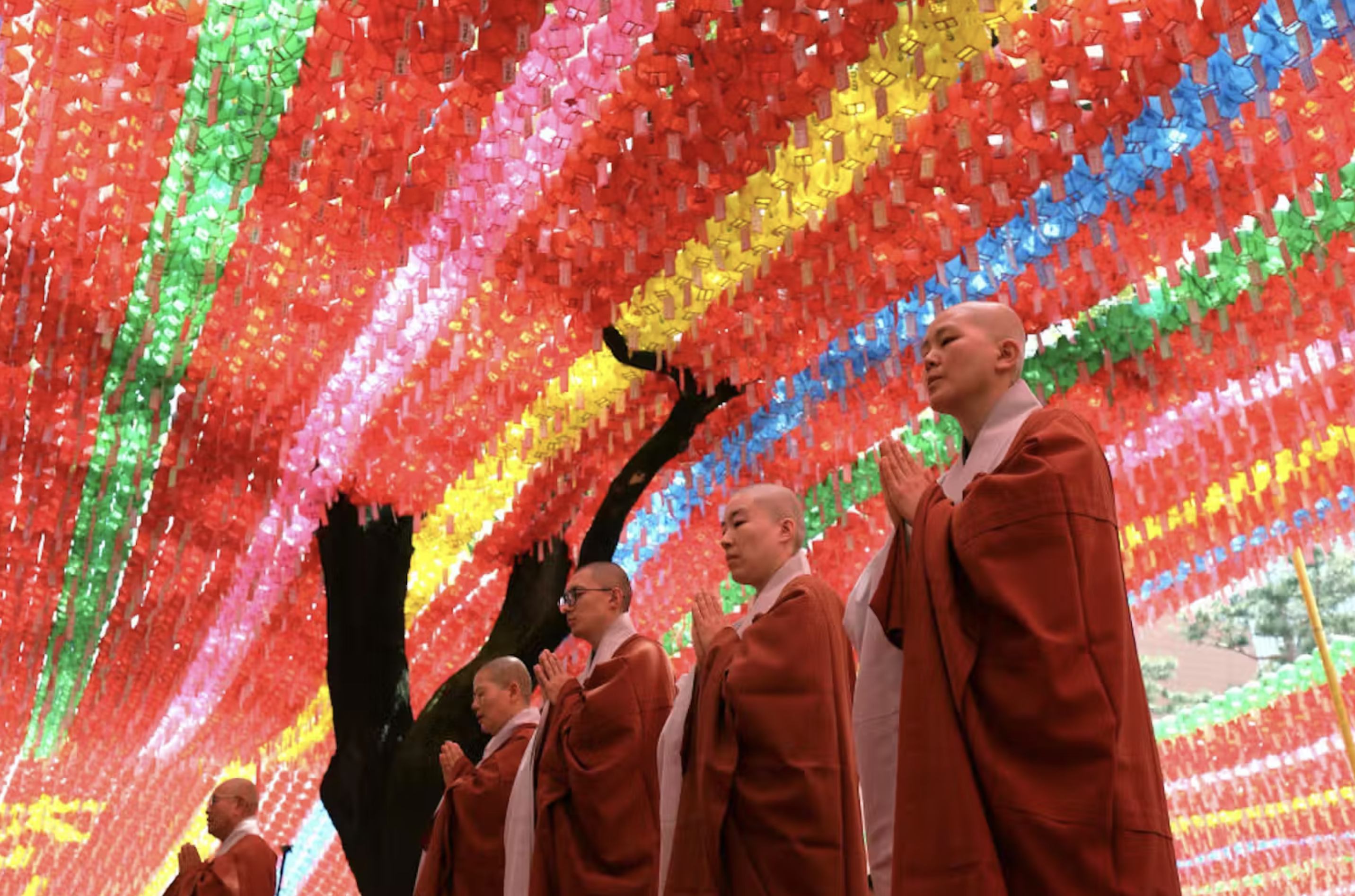
Korean celebrations of the Buddha’s birthday are distinctive for their use of lanterns, which represent the light of awakening and can also be used as vehicles for prayers and vows sent up toward the heavens. Today in South Korea, colorful lantern displays and lantern parades mark the national holiday.
The Buddha’s birthday has even been observed in North Korea since 1988, despite the country’s general suppression of religious activity. In 2018, the holiday served as an occasion for Korean unity, with Buddhists in North and South Korea jointly composing and reciting a prayer for the occasion.
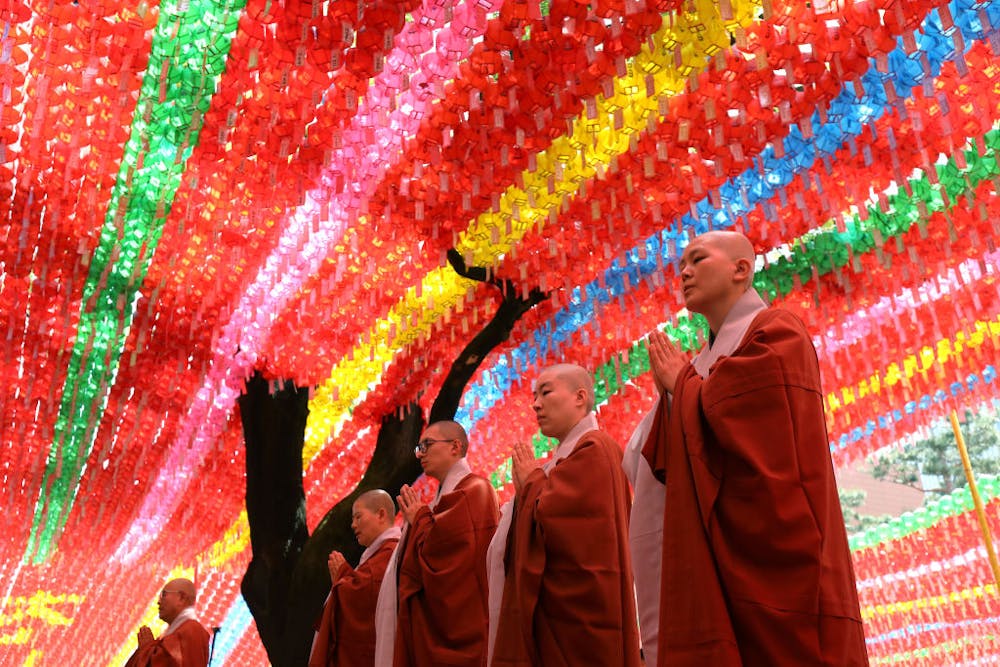
Vietnam: Renewed traditions
In Vietnam, the celebration of the Buddha’s birthday – known as Phật Đản – was observed in the medieval period, often alongside prayers for rain. However, celebrations seem to have faded over time until the festival was reintroduced in the early 20th century, when the holiday was gaining popularity throughout the region.
The holiday still remains somewhat obscure in northern Vietnamese villages, but has gained popularity elsewhere in the country. Today, Buddha birthday celebrations in Vietnam involve lighting paper lanterns, making offerings to the Buddha and praying for health and well-being. Lotus-shaped lanterns are especially popular because they symbolize the ability to remain pure in an impure world, just like beautiful lotuses grow from murky swamps.
Buddha birthday celebrations that fall earlier in the spring are often the ones international groups focus on. In 1950, the World Fellowship of Buddhists decided to make Vesak an international Buddhist holiday, commemorated on the first full moon of May. Nearly 50 years later, the United Nations passed a resolution to recognize Vesak on the same day, in line with South Asian and Southeast Asian celebrations.
These official acts of recognition mark the importance of this holiday for Buddhists worldwide, but we should also remember the just-as-meaningful celebrations that come a few weeks later.
Megan Bryson, Associate Professor of Religious Studies, University of Tennessee
This article is republished from The Conversation under a Creative Commons license. Read the original article.
Shepardson on Turkey’s historic city of Antakya
Turkey’s historic city of Antakya, known in Roman and medieval times as Antioch, has been flattened by powerful earthquakes in the past – and rebuilt itself
Christine Shepardson, University of Tennessee
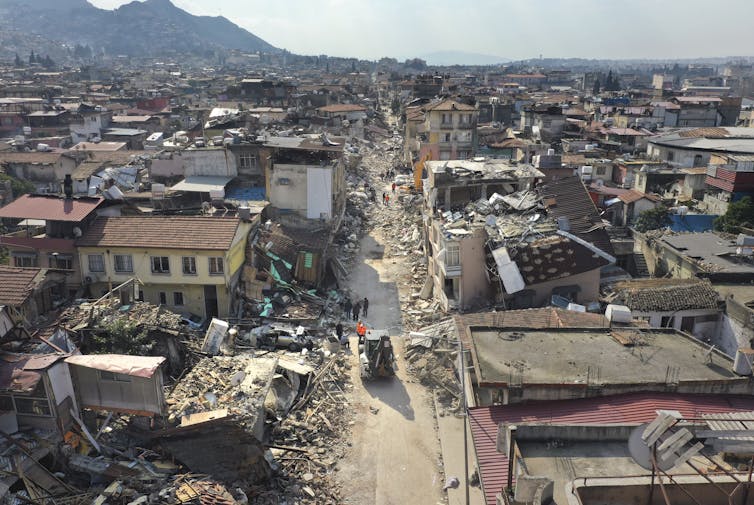
Tens of thousands have died and millions have become homeless in southern Turkey and northern Syria after the massive 7.8 earthquake that struck on Feb. 6, 2023. But the ancient Turkish city of Antakya, known in Roman and medieval times as Antioch, has been here before.
In the late fourth-century Roman world, two days after a powerful earthquake shook the border of Turkey and Syria, the Christian preacher John Chrysostom delivered a sermon to the frightened congregation in his shaken city of Antioch, much as survivors today struggle to understand the destruction. “Your nights are sleepless,” he acknowledged, and possessions “were torn asunder more easily than a spider’s web. … For a short time you became angels instead of humans.”
As a historian of Christianity in the late Roman world, my research on the Christianization of Antioch took me to the area in 2006, 2008 and 2010, and my heart has been breaking to see the region where people welcomed me so generously shattered anew. It helps, though, to know Antakya’s rich history and the resilience and courage of its people, who have rebuilt the city before.
The layers of time
The city has known numerous rulers in its long history, and notable religious diversity. Jewish, Christian and Muslim communities have called Antioch home since late antiquity to today.
In the New Testament, Antioch is where Jesus’s followers were first called “Christians,” and the apostles Peter and Paul met in the city. Roman emperors often spent the winters in the temperate metropolis. The fourth-century Greek teacher Libanius declared in his oration “On Antioch” that this city on the Orontes River was so beautiful that even the gods preferred to dwell there.
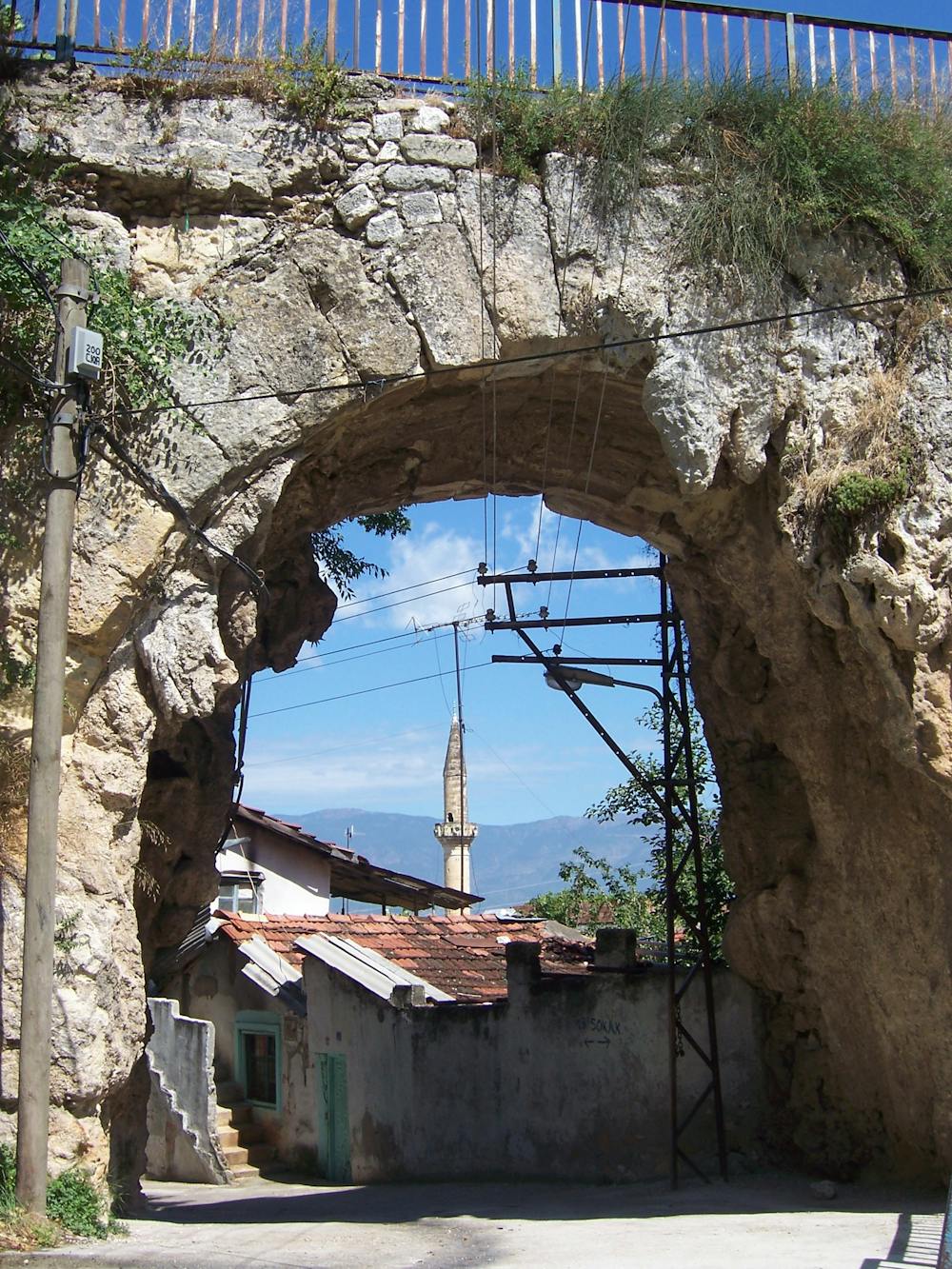
The ancient Greek and Roman city came under Muslim control in 637, returned to Greek Christian control in the 10th century, Muslim control briefly in the 11th century, and then western Christian control in 1098 during the First Crusade.
The Crusaders established the Principality of Antioch, which lasted until the 13th-century arrival of the Mongols, when after some struggles the city ultimately found itself ruled by the Muslim Mamluks based in Egypt. It became part of the Ottoman Empire in the 16th century, and after World War I, France oversaw the region as part of Syria until it was annexed by Turkey in 1939. It has received countless refugees since Syria’s civil war started in 2011.
During my visits, the textured layers of the city’s long history were visible everywhere. The main Kurtuluş Street followed the old Roman road, and the Habibi Neccar mosque, destroyed in the recent earthquake, commemorated the city’s early Muslim history on a site that was previously a church.
The Orontes River still flowed through the city, and modern homes nestled, as Roman homes once did, against the mountain where early Christian ascetics withdrew to pray; remnants of the Roman aqueduct and medieval stone walls snaked through the city and up the mountainside.
The trembling Earth
Earthquakes have punctuated the city’s past as well as its present, including at least two that utterly devastated the Roman city in the way that we witnessed in February 2023.
In his “Roman History” from the early third century, the early historian Cassius Dio described the catastrophic devastation and loss of life from the severe earthquake that ravaged the city in 115, as “the whole earth was upheaved and buildings leaped into the air.” The early Christian historian John Malalas survived another devastating earthquake in the city in 526, and he described in his “Chronicle” the terrible fire that compounded the unfathomable destruction after “the surface of the earth boiled up and … everything fell to the ground.”
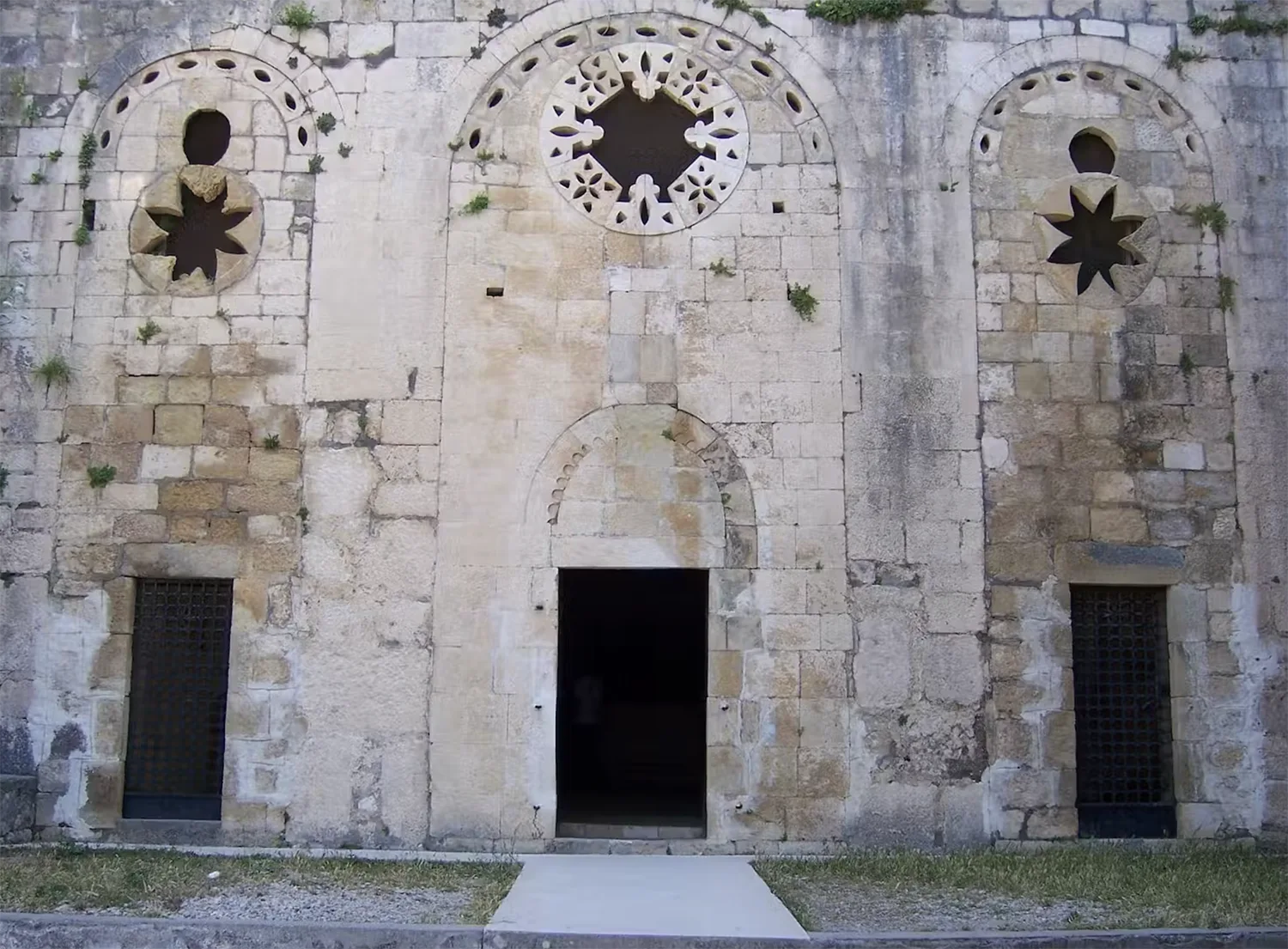
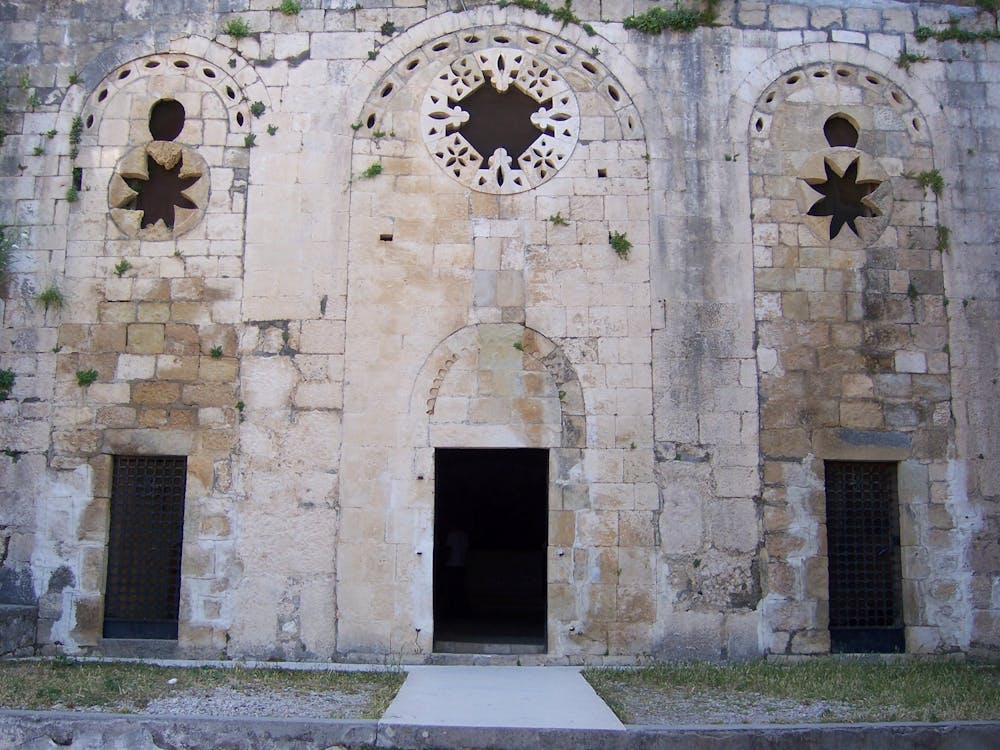
Today as well, countless buildings have been flattened, like the historic Habibi Neccar mosque, which had already been rebuilt after another earthquake destroyed it in 1853. The medieval Crusaders built a towering stone entrance to the mountain cave church associated with the apostle Peter, and we wait to learn if it has been damaged.
“I can’t tell you how much it was bad,” my friend Hülya replied to my first panicked message on Feb. 6. Much of her family in Antakya somehow survived, but her uncle and niece, our friend Ercan and his young family, and tens of thousands of others in the region were not so fortunate. “Pray for us,” she wrote.
Hope for the future
The city’s history, though, is one of transition and rebirth, and I believe there is hope amid the wreckage.
Malalas wrote that in 526, “Pregnant women … gave birth under the earth and came out with their infants unharmed,” echoing the survival of a baby girl who was born in Antakya on Feb. 6, 2023, under the collapsed rubble of her home, and has been named Aya, an Arabic word that loosely translates as a sign from God. The city’s Hatay Archaeology Museum houses a breathtaking collection of Roman floor mosaics from its suburb Daphne, famous since Roman times for its natural springs, and the Ministry of Culture has personnel on-site to protect it.
As neighbors dig through toppled buildings for survivors, the world rushes to bring aid. My Knoxville, Tennessee, friend Yassin Terou, a Syrian refugee himself, has returned to the region to provide meals for survivors as part of global relief efforts.
Aid workers and volunteers are rushing in to provide medical attention, food, shelter and clean water to the region, though it remains a struggle to reach those isolated in northern Syria.
The scope of the catastrophe is heartbreaking, but these echoes from the Roman past can, I believe, provide a hopeful reminder of the resilience of the city’s people who have rebuilt from devastating earthquakes before. Perhaps with the world’s support, they can do so again.
Christine Shepardson, Professor, Department of Religious Studies, University of Tennessee
This article is republished from The Conversation under a Creative Commons license. Read the original article.
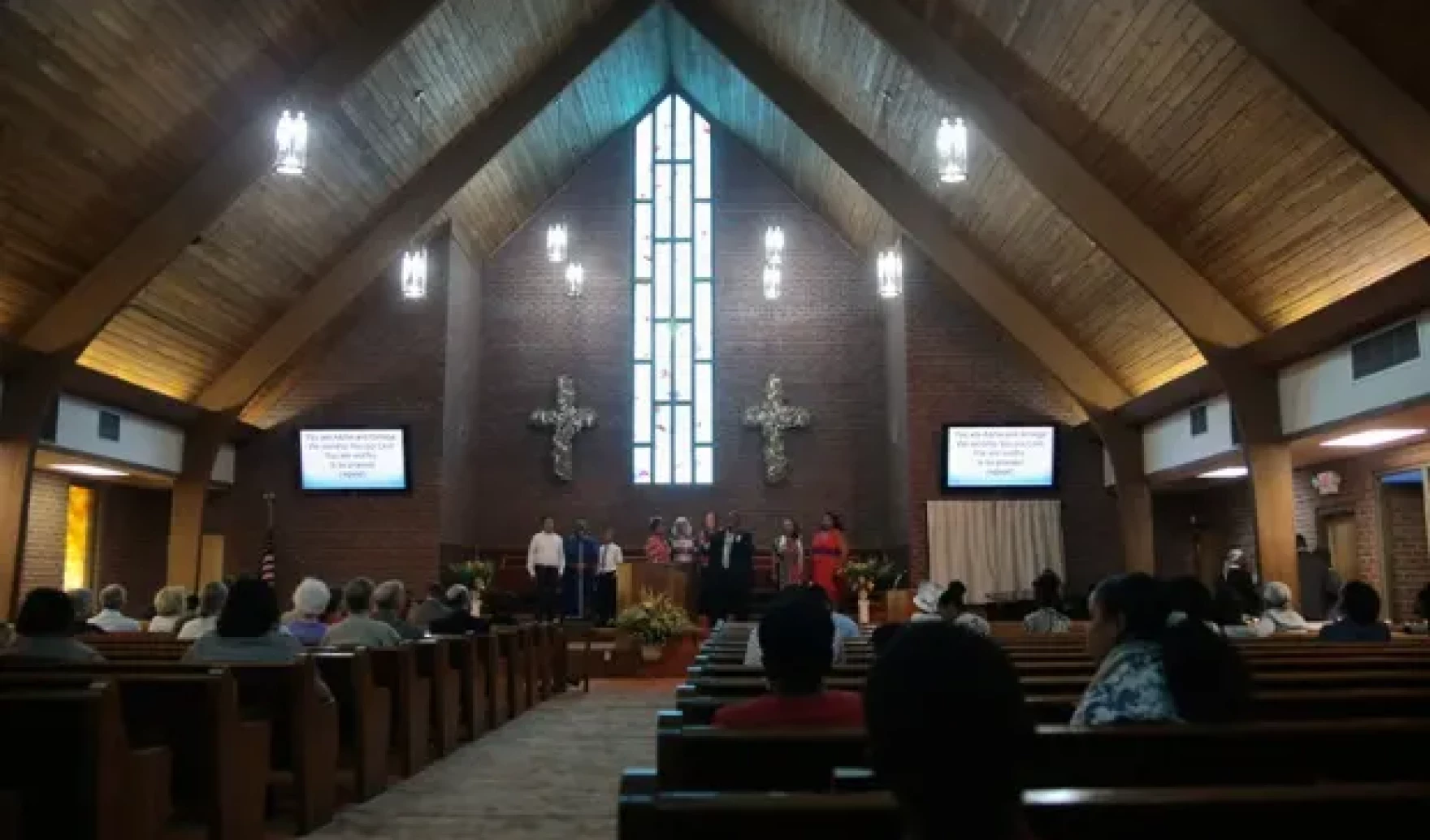
Spirit Guide: How the Arson of a Black Church in Knoxville Has Affected More Than the Church Community
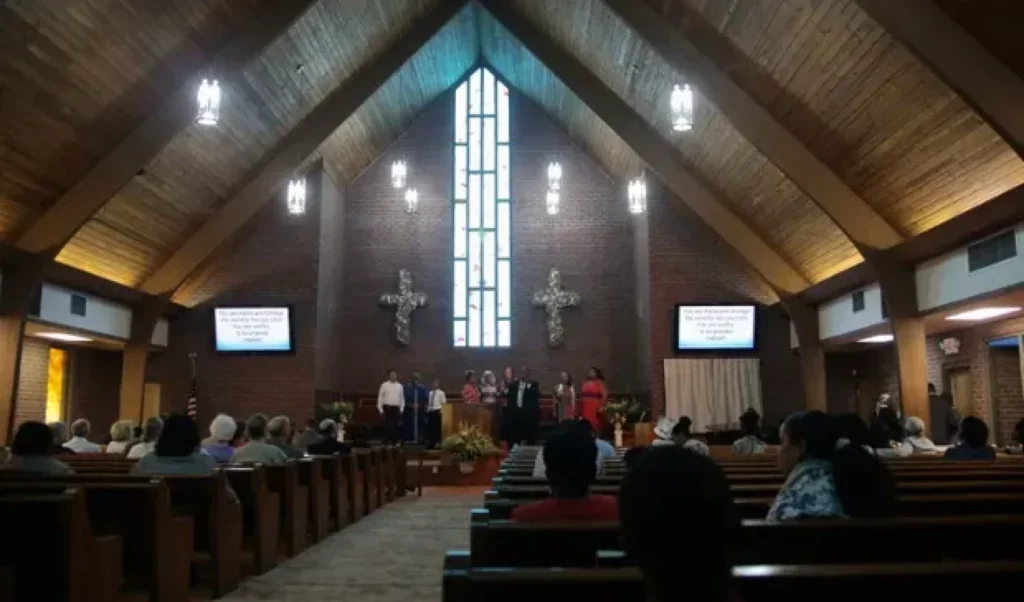
In June of 2015, a fire soon ruled as arson burned part of the College Hill Seventh-Day Adventist Church in Knoxville, one of several Black churches in the South that experienced arson that summer. Dr. Todne Thomas, a socio-cultural anthropologist and Associate Professor of African American Religious Studies at Harvard Divinity School, is studying what has happened in the church community and the city since the College Hill arson and she spoke about that work with WUOT’s Chrissy Keuper. Listen to the interview here.
Dr. Thomas is the speaker for the 2023 Distinguished Lecture for the University of Tennessee’s Department of Religious Studies. The lecture, “A Black Church Burned: Sanctuary, Loss, and Place-Making in Knoxville,” will be held Thursday February 16th at 5:30pm ET in the Lindsay Young Auditorium at Hodges Library (Room 101) on the UT campus and/or via live webcast.
More information is here.